Jessica van der Wal is researching honeybirds in the wilderness of Africa
- Jessica van der Wal
- Researcher at the Honeyguide Research Project

“My years at WUR were among the best of my life: I enjoyed the courses and lecturers and made close friends whom I still see today.”
Bridging cultures with African honeyguides
“From Wageningen to the wilds of Africa, Dr Jessica van der Wal blends biology, anthropology, and a love for the lesser-known. She co-creates research with colleagues across Africa to study one of nature’s most fascinating partnerships: people and greater honeyguide birds.”
A journey into field biology
Ever since Jessica moved from rural Tanzania to the Netherlands at the age of eleven, she knew that she wanted to become a field biologist. At first, she didn’t want to study in Wageningen, having lived there with her parents during high school. But after visiting other universities, Wageningen University & Research (WUR) became her number one choice.
Jessica: “My years at WUR were among the best of my life: I enjoyed the courses and lecturers and made close friends whom I still see today. Those years also included unforgettable field trips to New Zealand and Uganda, which not only gave me wonderful memories but also confirmed that I truly wanted to become a field biologist.
My growing fascination with behavioural ecology led me to pursue a PhD on tool use in New Caledonian crows at the University of St Andrews in the UK. After a short-term postdoctoral position in Finland and New Zealand, I moved to Cape Town in South Africa in early 2019 to join the Honeyguide Research Project, where I remain a core team member today.
Current position
I am a researcher with the Honeyguide Research Project at the University of Cape Town, supported by the Max Planck–University of Cape Town Centre for Behaviour and Coevolution. I founded and coordinate the Honey-hunting Research Network, a collaborative pan-African research initiative investigating how human communities and honeyguide birds work together to find and harvest wild honey across the continent.
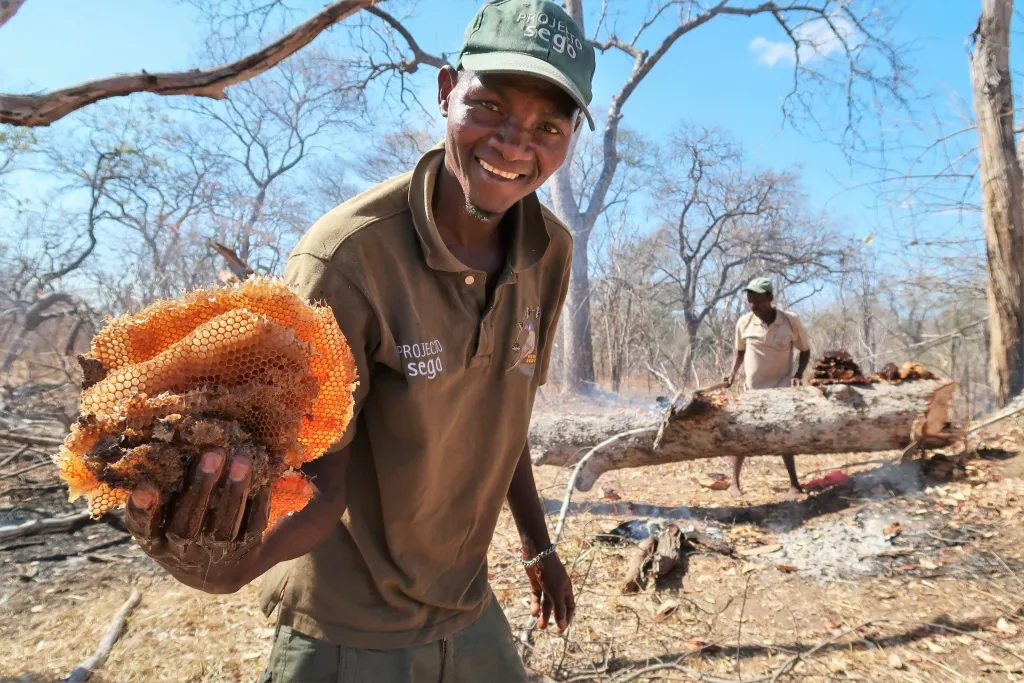
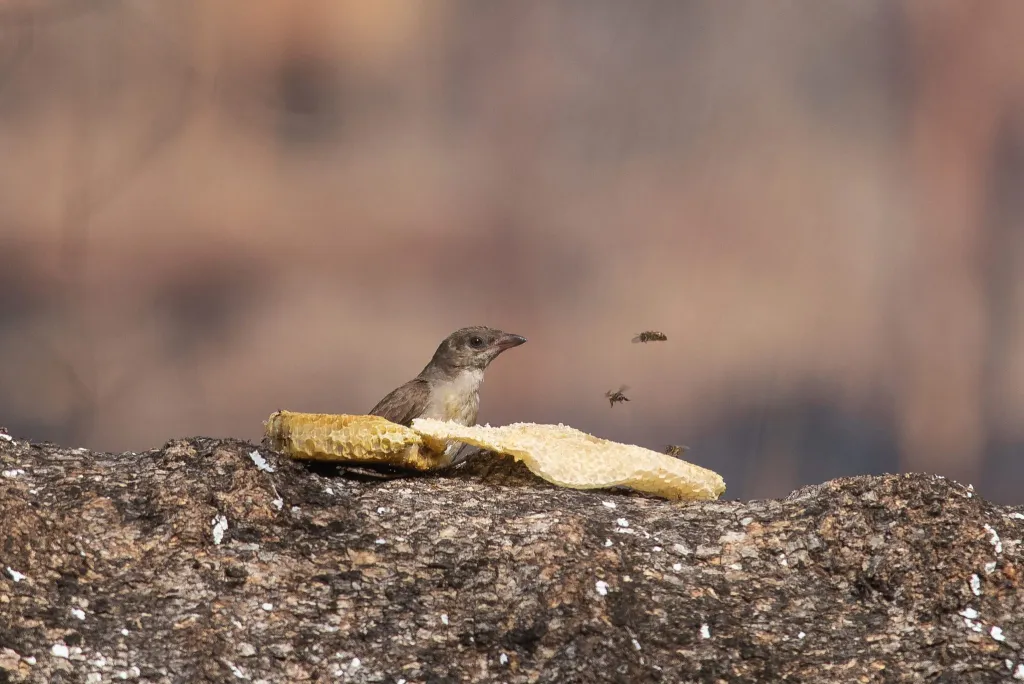
These remarkable birds guide humans to wild bees’ nests. In return, the humans break open the nests, harvest the honey, leaving behind beeswax: an important food source for the honeyguides which the birds feed on. Every honey-hunting culture is unique. This relationship is not just biologically interesting, but culturally rich. Different communities have distinct practices, calls, and customs to interact with and to reward the birds. Our research focuses on that cultural diversity and how it sustains the mutualism.
Honey-hunting Research Network
My colleagues at the University of Cape Town have been studying the human-honeyguide relationship in northern Mozambique for the past decade, where the Yao people heavily rely on wild honey, and honeyguides to find it. During my first field seasons there, I joined dozens of honey-hunts and had the joy of observing the cooperative relationship with honeyguides up close, during which the honey-hunters use a loud call: ‘brrrrr-hm!’ to communicate with the birds to find bees’ nests. I heard anecdotes that honey-hunters in the neighbouring village used a different type of call. Intrigued by this variation, I returned the following year with research funding to map honey-hunting call dialects across Niassa Special Reserve, which is the size of Denmark. This was my first experience with interview-style data collection, enabled by my knowledge of Kiswahili.
I then began gathering stories from other honey-hunting cultures in different countries that collaborate with honeyguides, but quickly realised I was not the best person for the job: it would be far more effective and enjoyable to work with researchers from the countries themselves. When working with communities, relationships matter more than data. So I started looking for local researchers in these countries who were eager to conduct interviews with honey-hunting communities who wanted to investigate their relationship with the birds.
Within the collaborative research model of the Honey-hunting Research Network that emerged next, early-career researchers from across Africa conduct interviews with honey-hunters and analyse how people communicate with honeyguides. The team has already assembled more than 1,000 interviews with honey-hunters and beekeepers across 13 African countries. The fact that data is collected by researchers from the countries themselves makes a huge difference. They understand the cultural context, know the logistics of how things actually work on the ground, and are therefore able to collect the best and most reliable data.
With this data, we can together examine how traditions and practices differ across regions, and how those differences shape the behaviour of the birds and the evolution of the mutualism. Ultimately I hope to deepen our understanding of how cultural practices and ecological systems co-evolve: how human signalling and bird behaviour influence each other, and how the mutualism might respond to cultural and environmental change.
There is a sense of urgency. Traditional honey-hunting practices are declining and may disappear in places due to modernisation, environmental change, or land use pressure. Documenting and understanding these changes matter. Our work can help inform conservation strategies by showing that human–honeyguide cooperation is not only culturally important, but also ecologically meaningful and worth protecting.
What do you like about your research?
I really enjoy the collaborative, interdisciplinary nature of my work. I combine behavioural ecology with anthropology and occasionally draw on techniques and insights from other fields, such as linguistics.
A particularly rewarding aspect is the collaboration itself. Having benefited from studying at a well-resourced university like WUR, I now work alongside students from African universities to support their development and strengthen their research skills. I guide them through projects, help connect them with networks across Africa and beyond, and assist with practical challenges in the field.
I also enjoy what I jokingly call ‘virtual fieldwork’: experiencing the field through the updates and photos shared by my colleagues via WhatsApp. I would love to be on-site of course, but I am mindful that my presence could influence interviews and other outcomes. And for me, as a mum right now, this approach works well.
WUR still brings me warm memories
I moved back to the Netherlands in December 2022 and now work remotely with regular visits to Cape Town. This is possible because my main job is collaborating—I do not have to be in any particular place most of the time. Everyone in our network is spread across Africa anyway. I live near Wageningen now, and I still feel a sense of joy when I drive past campus or see the many international students at the Saturday market.
Advice to students interested in interdisciplinary research
Don’t be afraid to mix biology with social sciences or to learn new methods. But remember that before you combine fields, you need a solid grounding in at least one of them. Different disciplines think, work, and reason in very different ways, and learning to bridge those perspectives takes time, patience, and humility. Also, you don’t need to know everything yourself: work with collaborators who bring complementary skills and expertise.”
Jessica van der Wal - WUR-Biology BSc 2010 and MSc 2012
Get in touch with Jessica
Photos of Jessica



Do you have a question?
Ask your questions about Alumni Stories to the author.
Follow Alumni on social media
Stay up-to-date and learn more about our alumni through our social channels.