Xavier Chiriboga Morales from Ecuador has a passion for insect ecology and the care of our planet
- Xavier Chiriboga Morales
- Associate Professor at University Yachay Tech and Associate Researcher at PUCE Santo Domingo, Ecuador

“Living abroad for the first time was both an adventure and a challenge. In Wageningen I met people from countries I never imagined to meet in my life”
Xavier Chiriboga Morales followed up his bachelor's degree in Agricultural Sciences with a master's programme in Plant Sciences at Wageningen University & Research. Although his journey was not always straightforward, he now has a succesful career as an Associate Professor at University Yachay Tech and Associate Researcher at PUCE Santo Domingo.
Why did you choose to study in Wageningen?
At the end of my bachelor’s degree in Agricultural Sciences, which comprised both Agronomy and Livestock Sciences, I wanted to continue studying further within a specialisation. I started browsing the internet, attending university fairs in Ecuador, sending requests for information to several universities and receiving them by post. I also heard from time to time about alumni of my Ecuadorian university who had gone to study a master’s in the Netherlands, in Wageningen. So, I thought “maybe that´s the place to be”. I was unsure about which master’s to choose, with so many options available. What I knew is that I loved plant biology and insects. My first application with a not-so-great English mark in the TOEFL was unsuccessful. After the second one, I was admitted to WUR and I applied for a NUFFIC Scholarship, one year later (September 2007) I landed at Schiphol airport and headed to Wageningen to start my master’s programme in Plant Sciences.
What was your time studying in Wageningen like?
Living abroad for the first time was both an adventure and a challenge. WUR supported us in finding a suitable place to live, often a studio in a student building nearby the new campus; for me that was at Bornsesteeg. That was the year when the brand-new Forum building was inaugurated by Queen Beatrix of the Netherlands! The AID (Annual Introduction Days) was the opportunity to realise how international WUR is. I met people from countries I never imagined to meet in my life: Mongolia, Rwanda, just to name few. Fortunately, we had a big Ecuadorian community in Wageningen, lead by a Dutch-Ecuadorian citizen, who used to scan Ecuadorian students at the International Club and add us to his email list. The Latin American community was rather large. I enjoyed the salsa and tango dancing courses, the Dutch language course, the athletism club, the swimming pool, cycling to Bennekom and Rhenen, the MovieW on the Lawickse Allee (very close to the old admin building). There was no time to get bored and, unfortunately, I had no time to join a study association.

Tell us about your career path since graduation and your current role/responsibilities
My career path has been hilly rather than straight. After finishing an internship at icipe (Int. Centre of Insect Physiology and Ecology) Kenya and obtaining my MSc degree at WUR, I was able to join the National Institute of Agricultural Research in Ecuador. After a while, I moved to AGROCALIDAD (National Agency for Plant and Animal Bio-security), where I managed the Laboratory of Entomology. After 4 years in my home country, I got a scholarship to pursue my doctoral degree at the University of Neuchatel in Switzerland. This part of my career path was not easy since I only got funding for 3 years and 3 months; the final year I got home to finish writing my thesis. A mix of personal unaccomplished wishes (working with parasitoid wasps) and unavailability of positions for Professors in Ecuador left me jobless for one year and pushed me to seek for a postdoc. This brought me back to icipe in Kenya. Since then, I have worked at two Ecuadorian universities so far and I am also associated to a botanical garden as an Associate Researcher. This stage of my journey has not been easy, I mean: looking for a niche (in Ecuador) where research and teaching are balanced and provide an ecosystem to advance my scientific area. In parallel, I'm showing what I have achieved so far in insect ecology in my website entoecologiainsectos.com.
In what way did your experience at WUR prepare you for your current career?
Wageningen University & Research was like a dream come true, studying at a research university where life and agricultural sciences converged for improving our communities and our planet as a whole. In addition, WUR offered me a very multicultural environment, which not only triggered cross-cultural dialogues and favored a collaborative environment, but also helped us to understand the differences and commonalities, as humans coming from different cultures. Taking all together, the WUR experiences shaped me as a global citizen and international researcher, I would say.
What advice would you give to students interested in pursuing a similar career to yours?
Go to WUR with an open mind, as a sponge that absorbs every good thing that Wageningen and the Netherlands can provide you. Make good friends, develop professional contacts and create a network. If you like, take advantage of the multiple projects and/or collaborations WUR has around the world and do an internship or thesis abroad. As with everything in life, you will have ups and downs. So, stay in close contact with your family and get support from your friends back home.
Do you still feel like a (proud) Wageningen alumnus?
Yes, I am very much proud to be a Wageninger.
Get in touch with Xavier:
Do you have a question?
Do you have a question about our alumni stories? Ask our team.
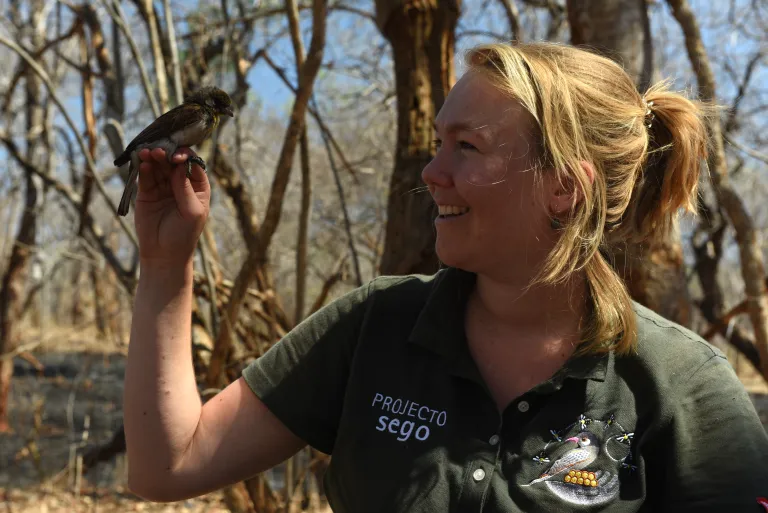
Jessica van der Wal is researching honeyguides in the wilderness of Africa
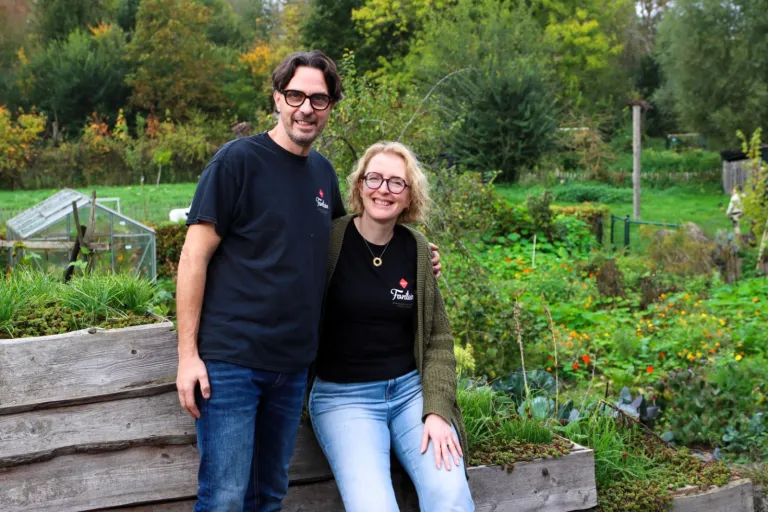
From lecture hall to love affair, a Valentine’s story from Wageningen: Lonneke and Rik tell how love blossomed
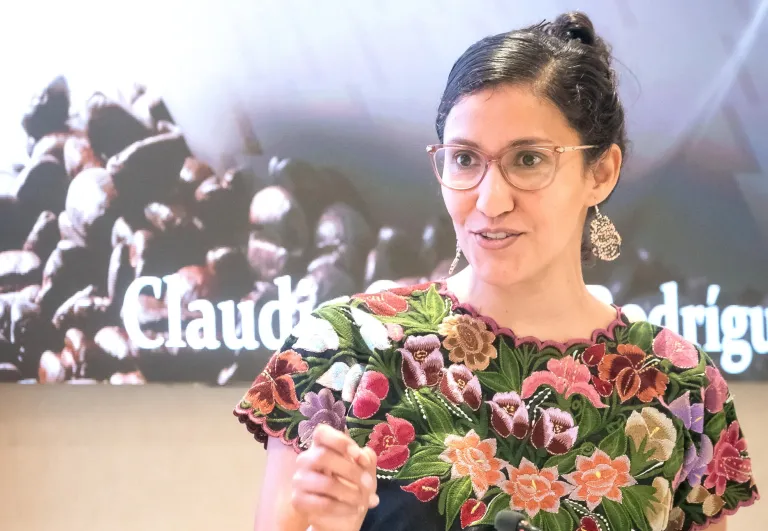
Claudia Oviedo-Rodríguez: from PhD researcher to Director Agrifood Systems at the Ministry of Agriculture in Mexico
Follow Alumni on social media
Stay up-to-date and learn more about our alumni through our social channels.