Inspiring people @WUR: Christa Testerink
- Christa Testerink
- Professor and chairholder of Plant Physiology
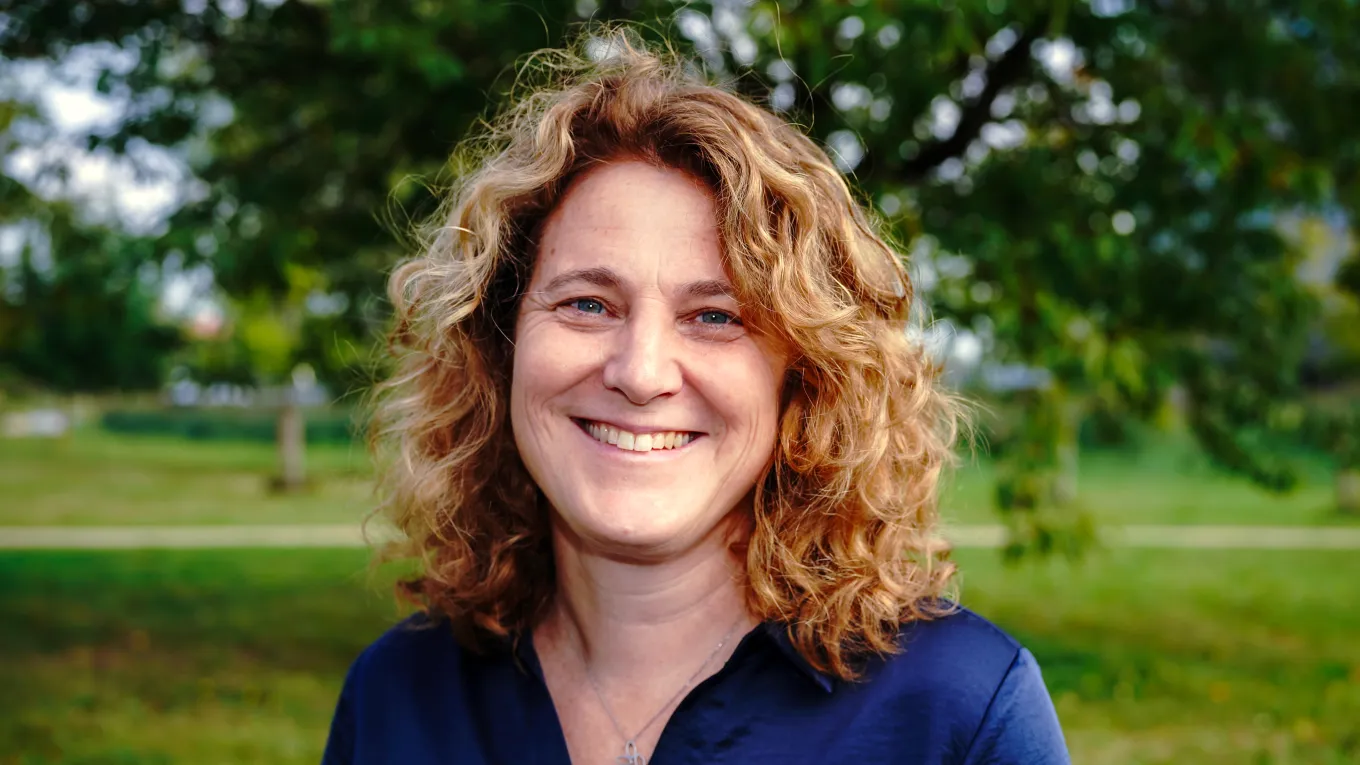
“There are plenty of women with motivation and expertise. But you have to be willing to find them.”
Christa Testerink has seen four Dutch universities from the inside. As a student and scientist, she was affiliated with VU Amsterdam, Leiden University, and the University of Amsterdam. She has now been working at WUR as a Professor of Plant Physiology for more than seven years. “I think we are doing relatively well at WUR when it comes to diversity and inclusion, but we need to improve further, and these things don't happen by themselves.”
Wageningen University & Research is committed to creating an environment of inclusion, diversity and equal opportunities, because we are convinced that this contributes to better research and better teaching. We are interviewing inspiring people about diversity and inclusion.
As a student, you are mainly developing your knowledge in a particular field. It is only when you move into a more senior position that you become aware of other processes and of an organisation's culture. At least that is Christa Testerink's experience. “At VU, I was an MSc student and in Leiden a PhD candidate. At the University of Amsterdam (UvA), I was an employee, as I am now at WUR. That is why I think I can only really say something about UvA and WUR.” Testerink left UvA in 2017. During her time there, she progressed from postdoctoral researcher to professor, the only female professor within the entire Faculty of Science at the time.
What cultural differences did you encounter, and what distinguishes WUR from other universities?
“I think we are doing relatively well at WUR in how we interact with each other when it comes to diversity and inclusion. There is a somewhat friendlier atmosphere here and people are less likely to pull rank. It's an atmosphere in which people get along just a little more easily and pleasantly. UvA had more of a macho culture. People there are quick-witted and enjoy ‘challenging’ each other a bit, without realising that this is not always inclusive. I experience WUR as a pleasant place, with respectful manners, less competition, more collective thinking, instead of everyone priding themselves on their merits. You don't necessarily have to be loud to be heard.” So there is potential for WUR to become an inclusive place.
What opportunities is WUR still missing when it comes to promoting D&I?
“It is good that we now have a D&I officer, but the topic is too wide-ranging for one person. We can create a wider base of support if D&I is not a separate little item embedded in HR, but instead there is a steering group or project group in which people with influential positions from all science groups are represented. But one that has real mandate and resources. That kind of weight is needed to really get something off the ground.”
“It would also be good if the focus shifted from ‘having to’ to ‘wanting to’, and if it becomes a topic of and for everyone, not ‘just the few’. But there is still work to be done before we get there. These things don't happen by themselves, despite what some people say. Attracting and retaining more diversity should not be a consequence of chance, but a strategy that the organisation takes seriously and that we actively pursue and invest in.”
The percentage of women at WUR is 50% on average, but it is much lower in management and scientific staff positions, especially in the Plant Sciences Group. In Plant Physiology, however, there are well above 50% of women, also in senior scientific positions. Do you have an explanation for this? Is it a coincidence, or do you give preference to women?
“That relatively high percentage is quite exceptional. It kind of evolved that way, I think. Although we do try our best to set a certain atmosphere in the job description and during interviews. We try to be inviting, for women, for international colleagues, for everyone. Of course, we use various committees and structured interviews.”
You sometimes here that there are supposedly no women available for a particular position. Where do you get all these well-qualified women? How do you do it?
“There are plenty of women with motivation and expertise. But you have to be willing to find them. Hence also the importance of the image you create, for example of the research group on the internet. What you outline there should be attractive, because that is where people look first. To retain people, it is important to offer them perspective. Women tend to be more self-critical than men, in which case they can use some encouragement. For example, by expressing your trust in their abilities, and thinking along with them. In short: be aware of the image you project, offer a female role model, consider the rest of the team, the vacancy text – it all contributes to the impression you make.”
Is WUR doing enough in this area?
“Our language, customs and mores are currently not yet inclusive. Neither are our rules and regulations, which we sometimes apply a bit rigidly. Clearly, women need more leave than men around the birth of a child. Just organise it properly, don't make it a problem, but facilitate what people need. When it comes to recruitment, what is important are a structured procedure and a broad committee that steers clear of tunnel vision. For professorial positions, we now have this in place, but for tenure trackers (TT) we are actually letting go of any coordination. While this is your potential: the people who will be leading this organisation in 10-15 years' time. Also: Take the time to talk to current tenure trackers and take them seriously. And consciously take the time to listen to young women, and colleagues who have just joined WUR from outside.”
“The mentoring of talent is also important, both academically and socially. In science, you often have to prove yourself first to be offered a chance. It may help to turn that around: giving people a chance early on, giving them perspective, so that they can develop. Especially if they don't come from the privileged group.”
What kind of challenges does a woman face when climbing the academic ladder?
“Well, where shall I start? The image we have of a scientist is a man; a woman is seen as an exception. Women always have to deliver more to be worth the same in the eyes of society. As a woman, you are constantly underestimated. Women are constantly scrutinised, and always found wanting. So in that respect, it also makes sense that they are (or have become) self-critical. A man does not have to do everything perfectly to still be seen and appreciated as a successful scientist or manager. The gap doesn't even have to be that big, but if everything you do is just a little bit harder each time, you build up quite a difference over time.”
“And then, there are cases of real harassment. Or you get comments thrown at you like: ‘Don't you find it annoying that you were hired just because you're a woman?’, when you were clearly chosen based on merit. That costs so much energy. Women sometimes ask me for advice on how to respond to such comments. I think it is statistically incorrect: with an overrepresentation of men in senior positions, men are the ones being hired because they are a man. A preferential policy for women is an attempt to rectify this. And when you see how slowly that is unfolding, you cannot say that women have an advantage.”
What makes a female scientist different from a male scientist? Do you see differences in terms of quality, competences, approach or perspective?
“No, absolutely none. Such questions distract us away from the problem. Women and men are equal in their role and abilities as scientists. And still, within our chair group we aim for a 50/50 ratio. Simply to promote diversity within the team.”
What do international employees contribute socially and scientifically?
“Internationalisation is necessary for a university to be a global player. It also makes WUR a fantastically interesting workplace. But international employees do not yet have equal opportunities within WUR. They do not know the language, they have to find their way through the jungle of rules, find a home, and become familiar with the mores and customs of Dutch culture. Just as with women in academia, international colleagues have to contend with a different playing field than the dominant group: Dutch men. That is something we need to change.”
How could internationals be better supported in this?
“We can help international employees by offering them a partner programme, helping them to find a house, having a critical look at our application process – including the procedural side of it, the forms, and so on. And also by not leaving them to fend for themselves so much, actually providing more support – without expecting gratitude in return, by the way. It is good to talk about this in a focused way, both to create realistic expectations and to assess what support someone needs.”