Programmes and courses for plant breeders

Plant breeders play a key role in shaping a sustainable and resilient future for global agriculture. Whether you work on improving crop yield, resilience to climate stress, or nutritional quality, your expertise is vital to securing our food supply. At Wageningen University & Research, you can strengthen your scientific foundation and practical skills through flexible, research-based programmes that help you innovate for tomorrow’s crops.
Our courses for plant breeders (12)


Custom made programmes
Looking for tailored training for your R&D or breeding teams? Wageningen Academy designs custom programmes that address your organisation’s specific challenges.
Advance your expertise in Plant Breeding
Whether you want to pursue a full online master’s degree or strengthen specific skills, Wageningen University & Research offers flexible learning paths in Plant Breeding that fit your career stage and goals.
Online Master’s Plant Breeding
A part-time, research-based programme that combines molecular genetics, breeding design and data-driven crop improvement. Designed for professionals who want to deepen their scientific expertise and gain an internationally recognised MSc degree.
Online Master’s Courses for Professionals
Select one or more courses from our offer of Online Master’s Courses Plant Breeding to expand your expertise without committing to the full degree programme. Study in a group of peer learners online alongside your work and earn a recognised certificate for each course that you successfully complete with an exam.
Self-paced Courses
Short, flexible courses on key topics such as genetics, genomics and breeding for resilience. Learn at your own pace and stay up to date with the latest scientific developments from WUR experts.
Testimonials
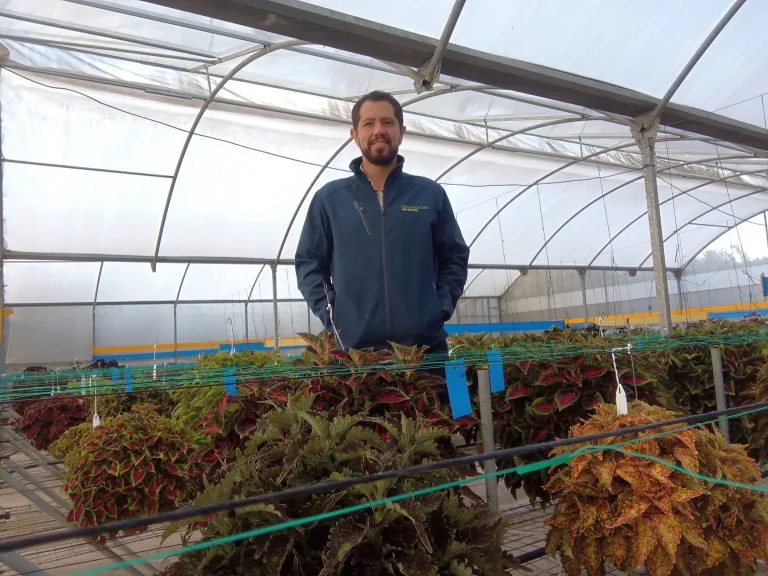
Read the testimonials of participants from our plant breeding courses.
Frequently Asked Questions
That depends on the course or programme. For details on the type of certification, accreditation or degree, please view the description of the course or programme of your interest. Or, if you’re looking to obtain a specific kind of accreditation (i.e. ECTS), you can use the filter to select which kind in the left column on our programmes and courses overview page.
WUR offers a wide range of programmes for Bachelor's and Master's students, as well as for professionals and for anyone with a healthy appetite for knowledge. MOOCs specifically are open courses where anyone is welcome to join, regardless of your educational and professional background.
Please view the course or programme description of your interest to find specific information on the required entrance level and prerequisites.
WUR welcomes people from all over the world; native and non-native speakers. The language of most courses is English. Depending on the programme an advise or requirement is stated. English language requirements for admission to a Master’s programme and Master courses is defined for Dutch nationals, EU nationals and nationals outside EU/EFTA, respectively.
For MOOCs and all other Professional Education programmes CEFR level B2 is advised, not obligatory. A B2 user can communicate easily and spontaneously in a clear and detailed manner. This is not yet an experienced speaker, but a B2 user is able to understand and be understood in most situations.
We offer self-paced courses, that allow you to study at your own time and pace. Also we offer instructor-paced courses, where the pace is set by the instructor and course material becomes available as the course progresses. This allows you to study from anywhere and still interact with peers and enjoy qualified live instruction.
After you enroll, you will receive a confirmation of your registration via email. Be sure to check your spambox. If you still can’t find the confirmation email, don’t hesitate to contact us.
That depends on the programme. For more information, see the description of the programme of your choice.
Visit this page to read more about Edubadges.


