Hands-on Course CRISPR-Cas in Plants

Key details
About this course- On-site on Wageningen Campus
- Wednesday 27 January – Wednesday 3 February 2027
- 6 days
- Practical lab experience included
- € 3,550.00
Learn about this course
Who is this course for?
Professionals working in seed business, plant breeding, biotechnology and related industries, also regulatory agencies and academics are welcomed. The target audience consist of plant breeders, molecular breeders, seed technologist and others with an interest in modern breeding technologies for plants. A basic level in plant sciences and/or biology is advised.
Learning outcomes
- Understand the principles of CRISPR-Cas variants and their applications in plant genome editing.
- Recognize key technical, legal, and intellectual property challenges associated with plant genome editing.
- Design genome editing strategies in plants and perform mutation detection assays to evaluate and validate genome editing outcomes in plants
- Make informed decisions to design a tailored gene editing strategy for your plant breeding business.
Programme details
This unique programme consists of (guest) lectures, hands-on practicals and group work on case studies based on your crop & traits, and the chance to network with industry peers and experts. As part of this course, you will gain practical lab experience creating targeted mutations in plants, from designing and building CRISPR-Cas constructs, to introducing them into plants and finally detecting the resulting mutations.
The following topics and activities will be covered:
- CRISPR-Cas essentials and variants
- Intellectual Property Rights (IP) and EU regulations
- Examples of application of CRISPR-Cas
- Delivery methods (regeneration & transformation)
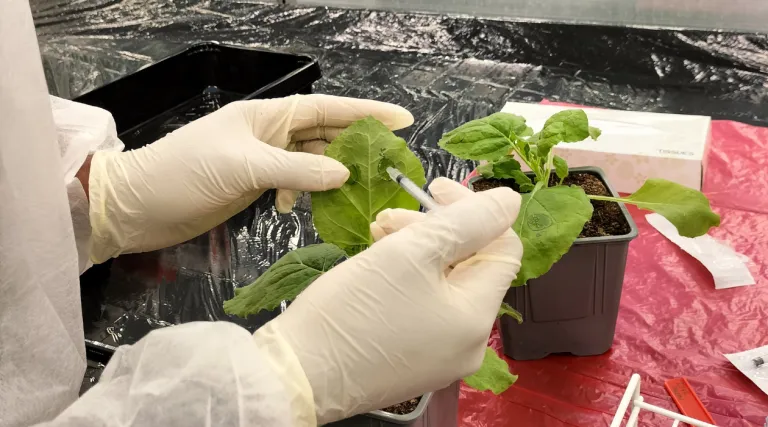
- Practicals : Cloning a guide-RNA expression vector, sequence verification of guide-RNA, introduction of guide-RNA into Agrobacterium, agroinfiltration of CRISPR-Cas constructs into plants and mutation detection
- Case study (group work): Crop & traits, identify target sequences and guide RNA selection
Particular attention will be given to all steps needed for successful gene editing as well as Cisgenesis. You learn to assess whether CRISPR-Cas suits your breeding programmes or Cisgenesis is the best choice, and understand whether CRISPR-Cas can be performed in-house or if outsourcing is the best choice for you.
Via the Blue button below you can download the brochure with the day-to-day programme.
Certification
After completing the programme, you will be awarded with a certificate.
“A 5 star course. This course offers a great mix of expert guidance, group work and practical CRISPR-Cas lab experience, focused on applying gene editing strategies for your breeding business.”
- Miriam Fernández Calleja
- Genomics Project Lead at SEMILLAS FITÓ, participant 2025
Brochure CRISPR-Cas in Plants
Testimonials
Hear directly from our course leaders and alumni about their experiences, lab insights, and key takeaways.
Coordinated by
Related content


Interested in CRISPR-Cas in Plants?
Organisational unit
Educational type
Interest area
Date
Wed 3 February 2027