Micro-organisms show promise for reducing emissions from manure

- ir. HC (Herman) de Boer
- WR Onderzoeker
The microbial product Kopros may help reduce methane and ammonia emissions from dairy cattle housing. Researcher Herman de Boer has found initial indications of this potential. The treatment altered several properties of the manure.
Dairy farmers sometimes use additives in their cattle housing to reduce emissions from slurry. Emissions of substances such as ammonia occur when urine and faeces mix on the floor of the housing. At the same time, dairy farmers want to increase the fertilising value of the manure when it is applied to agricultural land.
De Boer investigated whether the product Kopros B could fulfil both functions by testing whether the treatment changes certain properties of the manure. Kopros needs to be sprayed onto the housing floor periodically. The micro-organisms are expected to multiply in the manure on the floor and subsequently continue to act in the slurry pit.
Estimated ammonia reduction of almost a third
Measurements of various manure properties indicated that applying Kopros could reduce both methane and nitrogen emissions. Based on these findings, the researchers estimated that ammonia emissions from the cattle housing decreased by 30% or more during the study period. This percentage was derived from changes in manure composition and does not represent a directly measured reduction in emissions.
One possible explanation for lower ammonia emissions is that the micro-organisms used form a protective biofilm on the housing floor or on the surface of the slurry in the pit. A biofilm is a thin, slimy layer of micro-organisms that attach themselves to a surface. Whether such a biofilm actually forms and has this effect remains to be investigated.
Effects after manure application
The higher pH and ammonium content following treatment with Kopros mean that the manure could produce higher emissions after being applied to agricultural land. However, the treated slurry is also less viscous, allowing it to infiltrate the soil more quickly and counteracting the effects of the higher pH and ammonium content. Further research is needed to determine the overall effect on ammonia emissions after manure application.
The research was conducted by Wageningen Livestock Research and funded by the municipalities of Altena and Woudenberg, Rabobank, the Mesdagfonds and Novus AgroEcology.
Read the full report: Effecten van Kopros op ammoniakemissie en stikstofwerking van rundveedrijfmest.
More information
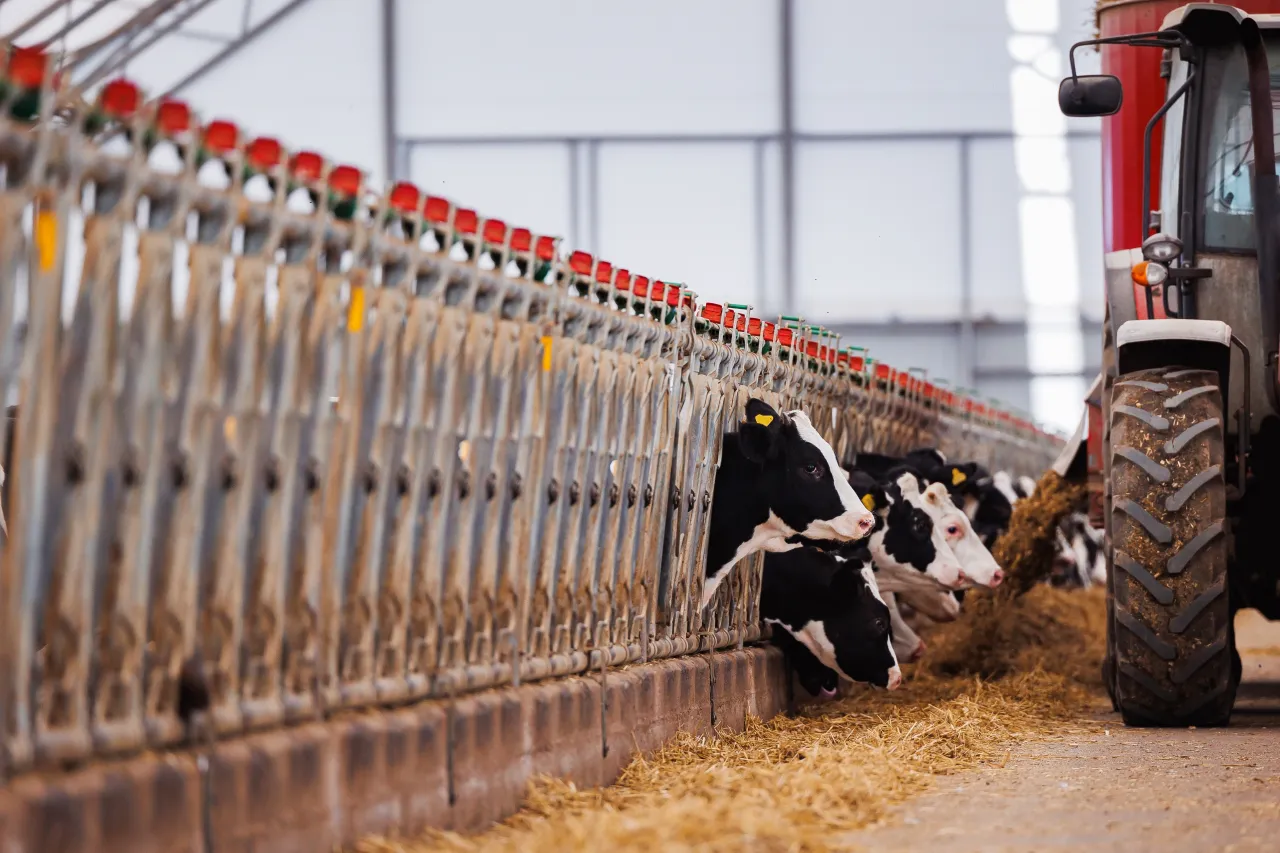
For the study, a dairy cattle house with a slatted floor was divided into a treated and an untreated section. Each section had its own slurry pit. In the treated section, Kopros was applied to the slatted floor every four weeks. The cows in both sections received the same basic diet. From late September 2025 to mid-February 2026, manure samples were regularly collected from both pits.
The researchers analysed various properties, including pH, organic matter content, nitrogen, ammonium and volatile fatty acids. Ammonia emissions from the cattle housing were not measured directly.
The treatment altered several properties of the manure. The concentration of volatile fatty acids decreased by more than 60%. This substantial reduction is consistent with observations on farms that treated manure has a less pronounced odour. The treated manure also contained less organic matter. The pH increased, as did the concentrations of ammonium nitrogen and total nitrogen.
The substantial decrease in volatile fatty acids, including acetic acid, may indicate lower methane production. Direct methane measurements are needed to confirm this.
The nitrogen-to-phosphorus ratio in the treated manure was higher (after correction) than in the untreated manure. Phosphorus does not volatilise from manure. A higher nitrogen-to-phosphorus ratio therefore indicates that less nitrogen was lost through volatilisation from the treated section of the cattle housing.
The researchers recommend testing the treatment under controlled and representative conditions, using an untreated control and direct measurements of ammonia and methane emissions. Further research is also needed into the possible formation of a biofilm, changes in the manure microbiome and the effects after manure application.
Contact
Do you have any questions on this topic, or do you see opportunities for collaboration with us? If so, please get in touch with our expert.