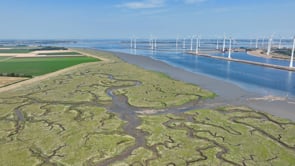
Options for designating 'non-sensitive areas' under Nitrates Directive are limited

The Committee of Experts on Fertiliser Law (CDM) has concluded that the options in the Netherlands for designating ‘non-vulnerable zones' under the Nitrates Directive are limited. The committee has reached this conclusion based on recent ground and surface water quality. In areas where water quality standards are still currently being met, there is a real risk of water quality deterioration if measures from the Nitrates Directive Action Programme are abandoned. Under European regulations, deterioration is not permitted. If consideration is given to not designating part of the Netherlands as a vulnerable zone, an in-depth and quantitative assessment of the impact on ground and surface water quality must first be carried out.
The European Nitrates Directive (1991) aims to reduce and prevent water pollution from agricultural sources. This mainly concerns nitrate, a substance which can enter ground and surface water via manure and which is harmful to humans and nature. To prevent this pollution, European countries must take measures, which are laid down in action programmes.
In 1994, the Netherlands opted not to designate vulnerable zones, but to have the action programme apply to the whole country. The Ministry of Agriculture, Fisheries, Food Security and Nature (LVVN) asked the CDM whether the Netherlands could limit the measures in the Nitrates Directive Action Programme to 'vulnerable zones' only, and what that would mean for water quality.
When is an area 'vulnerable'?
The Nitrates Directive contains criteria for identifying vulnerable zones. Important criteria include current ground and surface water quality, and the impact on water quality of abandoning measures from the action programme.
What does water quality in the Netherlands show?
Measurements in recent years show the following:
- Groundwater: In parts of the Netherlands, especially in sandy and loess areas, the average nitrate concentration is above the standard of 50 mg per litre. In clay, peat and Northern sandy areas, the average nitrate concentration is lower. In the Northern sandy area, the average value is still below the standard at 45 mg per litre of nitrate, but it is exceeded in part of this area.
- Surface water: Average annual nitrate concentrations in surface water are below the standard of 50 mg per litre on average for most areas. Nitrate also plays an important role in eutrophication which is subject to stricter standards for nitrogen than the nitrate standard of 50 mg per litre. Furthermore, phosphorus concentrations in surface water should also be considered. Many Water Framework Directive (WFD) water bodies (ditches, streams, lakes and coastal waters) do not meet the targets for nitrogen and phosphorus concentrations in surface water.
- Coastal and transitional waters: Much of the Dutch coastal waters do not meet the threshold value for inorganic nitrogen concentrations. Analyses conducted as part of the Nitrates Directive reporting show that 20% of transitional and coastal waters were eutrophic in the 2020-2022 period, while 60% were potentially eutrophic.
Based on current water quality, the CDM concludes that ground and surface water quality in most of the Netherlands does not meet the standards.
What happens if measures from the Nitrate Action Programme are allowed to lapse?
If areas are no longer designated as vulnerable zones, measures from the action programme will no longer apply there. It is then expected:
- that more nitrogen, phosphate and livestock manure will be applied to agricultural land in these areas;
- that measures such as the cultivation of catch crops, rest crops and buffer strips will be implemented less;
- and that this will increase leaching of nitrate to groundwater and of nitrogen and phosphorus to surface water.
It is not clear whether water quality standards will then be exceeded in these areas, but the expected subsequent deterioration of water quality is not permitted under the Nitrates Directive, WFD and Groundwater Directive.
Conclusion
Based on current water quality, a large part of the Netherlands should therefore be designated as a vulnerable zone. In areas where the standards are currently met, there is a real risk of water quality deterioration if measures from the action programme are abandoned. That is not permitted under European regulations.
The CDM has therefore concluded that the scope for no longer designating parts of the Netherlands as a vulnerable zone is very limited. If consideration is given to not designating a part of the Netherlands as a vulnerable zone (after all), an in-depth and quantitative assessment of the impact on ground and surface water quality should first be carried out.
Read the full report here: Advies 'kwetsbare zones nitraatrichtlijn'
Questions?
Do you have a question about this topic or see opportunities to collaborate with us? Contact our expert.