Bachelor’s in Marine Sciences

What to expect
Facts & figures- Nature, Society, Food
- Fulltime
- 3 Years
- English
- Wageningen
Is this bachelor’s right for me?
Are you fascinated by the ocean and all its life? Are you interested in ocean-related projects, such as the Ocean Cleanup Project or offshore wind farms? Do you want to contribute to a sustainable future for marine life and the people who depend on it? Dive deeper into these topics with the Bachelor’s in Marine Sciences!
Curious? Come experience it for yourself during a Taster Day.

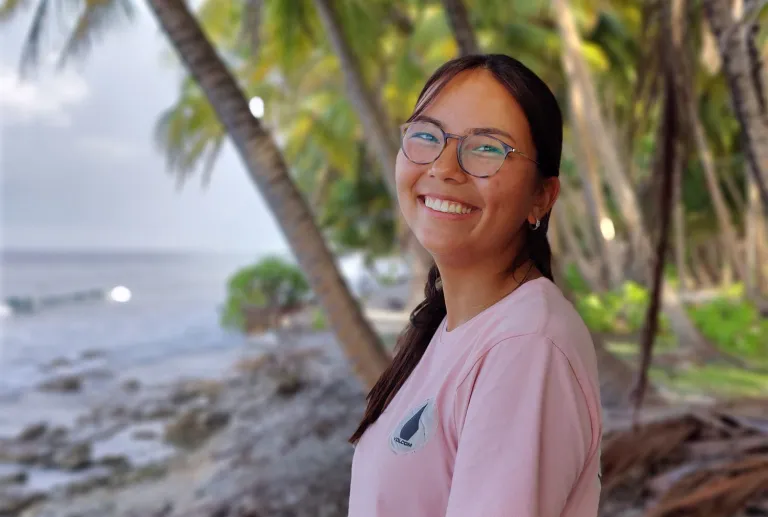
Why Madeline Chose Marine Sciences at Wageningen University.
What makes this programme unique?

Unique in the Netherlands
Marine Sciences is a new and unique programme in the Netherlands. There is no other scientific bachelor’s degree in this field. It's also a good preparation for the master's in Aquaculture and Marine Resource Management.

Multiple perspectives
In this broad programme you wil learn about the sea from the perspective of nature, food and society. You will be able to interact with engineers, biologists, environmental specialists and policymakers.

Combination of nature and social environment
You will not only be trained in ecology, but you will also learn a lot about the sea as a resource for people who live nearby and depend on the sea.

Job of the future
Innovative, sustainable solutions for (the use of) the ocean are urgently needed. The field is waiting for professionals like you!
What you will learn
Learn about marine systems, how the sea can be used as a food source, and the importance of the sea to society. Study the causes and consequences of ocean pollution, climate change, or how the sea can contribute to a sustainable food supply.

You will learn
- You'll learn everything about the ecology of complex ocean systems worldwide.
- You'll learn about the effects of climate change on water flows and marine life.
- You'll learn how seas and oceans can contribute to sustainable food production.
- You'll devise nature-based solutions for coastal areas and reefs.
- You'll gain the knowledge and skills to build bridges between conflicting interests.
- You'll learn how international laws and treaties can help ensure sustainable use of the sea.
Your courses
During the first year, you'll learn to understand and analyse a variety of marine systems. You'll also learn how to conduct research and combine different disciplines. The year concludes with a project in the Wadden Sea and the North Sea so that you can put your knowledge into practice right away!
Inspired by nature, you will work on solutions to international challenges. At the end, you will pitch your plan to a panel of professionals from the field.
You will also learn how to use Generative AI (GenAI) responsibly and ethically for scientific purposes. You will develop skills to critically assess AI output in scientific contexts. Each course has its own rules on whether and how you may use GenAI.
During the first semester of the third year, you decide what you'll study; this is the elective semester. Will you take a minor? Or will you choose your own electives? The second half of the year revolves around your final major project, which brings together everything you've learned. You'll assess the effects of nature-based solutions and conduct your graduation research.
A few examples of graduation research projects:
- What effect does seaweed farming in the North Sea have on biodiversity?
- How does plankton use bioluminescence to deter predators?
- How can we use AI and satellite data to ensure that fishers comply with international regulations for sustainable fishing?
In your third year, you can broaden or deepen your knowledge by taking a minor. You can even take your minor at another university or abroad!
Popular minors among Marine Sciences students at WUR include:
- Seagriculture
- Natural Resource Conflict and Governance
- Education
Some examples of students who went abroad for electives:
- Animal behaviour and ecology in Brazil
- Tourism and aquaculture in Norway
- Hydrology and geology in Malta
Check out all the minors.
The study consists of:
- Lectures: a teacher explains the course material to the class.
- Tutorials: you complete assignments under the supervision of a teacher.
- Group work: an assignment with a project group based on a practical example or case.
- Lab and computer practicals: you carry out experiments in the lab or work with models, simulations and data analyses.
- Excursions: To marine and coastal research institutes, and to Texel and Croatia. You'll learn how to conduct field research near, on, and in the sea.
- Self-study: scheduled into your timetable or at times of your choosing.
At WUR, you're never alone. You'll receive more support from lecturers, study advisers, and supervisors than at most universities. This reduces the risk of you dropping out and increases your academic enjoyment. It's our way of showing that we truly care about you!
Some bachelor’s programs at WUR are quite similar. We've listed the key differences for you:
- BSc Biology
In this broad Bachelor’s program, you'll learn about biology from cell to ecosystem. You'll focus on various environments: land and sea, near and far. In Marine Sciences, you'll truly focus on the sea, combining natural sciences with social sciences. - BSc Forest and Nature Conservation
Forest and Nature Conservation focuses on the ecological and social aspects of managing nature reserves and forests. In Marine Sciences, you focus on oceans instead of forests. - BSc Environmental Sciences
In the Bachelor’s program in Environmental Sciences, you'll learn to understand and address environmental and sustainability issues—for example, those related to nature, climate, and pollution. You'll combine technological, natural, and social science knowledge with practical skills, such as collaborating in international teams. Marine Sciences focuses on the oceans and has a more biological focus.

Bachelor’s Open Day
6 & 7 November 2026
Experience the vibe this November and see which programme suits you best
Students about this programme
4.5/5
Atmosphere4/5
Engagement & contact123
Number of first-years (Studiekeuze123)4.1/5
Student satisfaction (Studiekeuze123)Life after this bachelor’s
Marine Scientists find work all over the world. During the programme, you learn to look beyond disciplines and cultural differences. This helps you connect different perspectives and apply them in a wide range of careers. Here are a few examples of what you can do after graduating:
- Researcher: explore marine ecosystems in greater detail to better understand how we can protect them.
- Fisheries project manager: contribute to more sustainable fisheries by making sure that new rules and working methods fit the day-to-day practices of fishers.
- Head of aquaculture: organise mussel farming in the Wadden Sea in a way that minimises negative effects on biodiversity.
Want to see more examples? Or find out what a typical day looks like for a researcher or project manager? Read the stories of our graduates.
Student Career Services facilitates WUR students towards the labour market. If you need help in your orientation towards your future career.
Many students pursue a master's degree after completing their bachelor’s program. This provides you with even more knowledge and skills. Marine Sciences is a broad programme. You can always progress to:
- Master's in Aquaculture and Marine Resource Management
- Master's in Environmental Sciences
- Master's in Geo-Information Science
- Master's in Climate Studies
- Master's in Tourism, Society and Environment
- Master's in Development and Rural Innovation
A different Wageningen master's programme is also an option. In that case, in the third year of your bachelor’s programme, you choose electives that will facilitate your entry into the master's program of your choice. Your academic adviser will help you determine this route, ensuring you start with as little delay as possible. With the right minor, you can, for example, pursue the following Master's programmes at WUR:
- Master's in Animal Sciences
- Master's in Biology
- Master's in Forest and Nature Conservation
- Master's in Governance of Sustainable Transformations
- Master's in International Land and Water Management
Following a Master's degree at another university or abroad is often also possible, as your WUR Bachelor’s degree is recognized worldwide.
Good to know
To be admitted to the bachelor’s programme Marine Sciences, you should have studied mathematics, biology and chemistry.
Have a look at the Application & Admission page for starting at Wageningen University & Research and check whether your prior (international) education qualifies you for this bachelor’s programme.
Are you a Dutch student? Switch the language to Dutch at the top of these pages to view the admission information that applies to you.
Questions about admission or registration? The Student Service Centre can help you.
Curious about the financial investment this program requires? You can find all the information about the program's costs on this page: tuition fees and study costs.
Your student days are about more than just studying. Think student housing, fun parties, and student associations where you'll make friends for life. You can also join various sports clubs, like the student diving club The Seadragons. And all of this surrounded by nature, with the Rhine and the Veluwe just around the corner! In short, there's always something to do in Wageningen. Learn more about student life in Wageningen.
Questions about this study?
Do you have a question about the Bachelor’s programme in Marine Sciences? Our study advisers are ready to help.
Discover WUR


Discover all Bachelor's programmes at Wageningen University & Research
Follow Wageningen University & Research on social media
Stay up-to-date and follow all activities and stories of our students on our socials.