Course | Executive Education: Leading and organizing for sustainability

About this course
In short- Lead sustainability transitions beyond organizational boundaries
- Learn how to create value through ecosystem collaboration
- Multi-level coaching model
- 4 flexible learning cycles
- € 800,00 per cycle, free online participation for the first year
We offer a unique executive education programme designed for experienced professionals who want to move beyond basic compliance and learn how to create value through ecosystem collaboration. Designed for busy professionals, the programme combines academic depth with maximum flexibility.
About this course
Today's sustainability challenges cannot be solved by organisations acting alone. Regulatory requirements, stakeholder expectations, reporting obligations, and ecosystem dynamics increasingly shape strategic decision-making. Yet, most sustainability initiatives continue to be designed and managed from within organisational boundaries. Success depends not only on internal capabilities but also on the ability to coordinate action across networks of organisations.
To navigate this complexity, this programme introduces a framework for creating and integrating value across five essential dimensions:
- Economic: Innovation, investment, growth, and performance.
- Environmental: Resilience, stewardship, and resource protection.
- Social: Inclusion, community well-being, and shared prosperity.
- Human: Capabilities, learning, empowerment, and talent development.
- Institutional: Governance, legitimacy, trust, and coordination.
Participants learn how these dimensions interact and how organizations can generate integrated value rather than pursuing isolated objectives.
Multi-level coaching model
The course is built around live sustainability challenges provided by partner organisations. Every challenge is approached through a multi-level coaching model that combines different forms of expertise:
- Academic coaching: WUR Faculty support participants in applying theoretical frameworks, ecosystem concepts, and ACAST tools.
- Company coaching: Representatives provide access to real-world contexts, business realities, and strategic challenges.
- Executive coaching: Experienced practitioners help translate theory into managerial action.
What you will learn

By the end of this programme, participants will be able to:
- Understand your organization's position within a broader ecosystem and identify critical resource dependencies.
- Diagnose barriers that limit sustainability and transformation efforts.
- Design interventions that align stakeholders and mobilize collective action.
- Integrate economic, social, environmental, human, and institutional objectives into strategic decision-making.
- Develop an actionable ACAST Transformation Blueprint for creating and capturing value in complex ecosystems.
Who Should Attend
This course is ideal for:
- Executives, senior managers, and policy professionals operating in complex ecosystems preparing for their next strategic leap.
- Sustainability leaders seeking to move beyond regulatory compliance to turn sustainability pressures into strategic advantage.
- Professionals who need to coordinate across organizational boundaries and create value within complex stakeholder ecosystems.
Practical details
- Dates: Oct 26 – Dec 11, 2026 (Modular)
- Schedule & Effort: Hybrid (Wageningen University Campus | Online). Sessions run Tuesday to Friday, approximately 2.5 hours per day (11:00 to 13:00 / 10:30 – 13:00 CET, with extra Mondays during output weeks).
- Fee: Free online participation during the first year, with a formal certification track available for € 800,00 per cycle (includes individual supervision and coaching).
This programme consists of three two-week cycles. Participants can choose to attend a single cycle, combine multiple cycles or complete the full programme journey.
Week 1 — Input Phase
Guiding question: How can firms move beyond regulatory compliance to turn sustainability pressures into sources of strategic value and competitive advantage?
Learning objective: Understand how sustainability pressures can be reframed as strategic opportunities rather than cost drivers
Week 2 — Output Phase
Students select and apply relevant ACAST tools to analyse the company challenge, guided by the theories from Week 1.
Executive Deliverable: Executive Reflection Report applying action space analysis to your own organisation.
Coaching by Pauline Schuurman Landman (De Nederlandsche Bank), featuring practical cases from ITA (Tindaro Paganini) and Prysmian (Pirri Alessandro).
Week 3 — Input Phase
Guiding question: How can organisations design and coordinate their structures, processes, and people to effectively implement sustainability strategies and create integrated value?
Learning objective: Understand how organisational design, HRM, and coordination mechanisms translate sustainability strategy into operational reality.
Week 4 — Output Phase
Students select and apply relevant ACAST tools to design coordination and implementation solutions, guided by the theories from Week 3.
Executive Deliverable: Stopper Diagnosis Report identifying priority structural, institutional, and perceptual intervention areas.
Executive Deliverable: Executive Reflection Report applying action space analysis to your own organisation.
Coaching by Andreea Saizu (Ericsson) and Jordan Strik (Cofra Holding).
Navigate CSRD, ESRS, and double materiality to identify which coordination failures become visible through reporting requirements.
Guiding question: How Can Organisations Use Measurement, Reporting, and Accountability to Create Extended and Integrated Value?
Learning objective: Students learn sustainability reporting requirements and identify which coordination failures become visible through reporting and which stay hidden.
Students learn sustainability reporting requirements and identify which coordination failures become visible through reporting and which stay hidden. Participants engage directly with leading experts on:
- CSRD
- ESRS
- Double Materiality
- Sustainability Metrics
- Accountability Mechanisms
Workshops led by Liad Ortar (EFRAG) and Sytza Dijkstra (Simply Sustainable), featuring a practical case challenge from Radici AB (Amilcare Astone).
Week 6 — Input Phase
Guiding question: How can firms design sustainability strategies that create integrated value by aligning internal organisation, ecosystem stakeholders, and reporting requirements?
Learning objective: Using the sustainability strategies to analyse, design, and evaluate integrated sustainability solutions.
Week 7 — Output Phase
Executive Deliverable: ACAST Transformation Blueprint serving as your first implementation roadmap.
External Coaches & Company cases
Coaching by Bora Yücen (Amazon) and Marina Manti (EFRAG), featuring practical cases from NexiGroup (Rosella Cardone) and Signify (Paolo Ceccherini).
Contact our expert
For questions regarding the programme structure, modular attendance, or corporate group registrations, please contact our expert.
Important Registration Notice: The registration link provided above is intended exclusively for professionals participating in the Executive Education programme. Master's degree students must enrol through Osiris.
Learn more
At the centre of the programme lies the Actor-Centered Action Space Theory (ACAST). ACAST is an evidence-based framework that provides leaders with a structured way of understanding how change happens within complex systems.
Rather than focusing solely on a single organisation, ACAST examines how individual actors operate within an interconnected ecosystem. The methodology helps participants understand four critical dimensions:
- Ambitions: What outcomes are actors trying to achieve?
- Constraints: Which institutional, organisational, or systemic barriers limit action?
- Opportunities: What possibilities for change are perceived by different actors?
- Resource Dependencies: Which resources, relationships, and collaborations are necessary to move forward?
Using these dimensions, you will learn to identify hidden coordination failures, uncover opportunities for collaboration, and design interventions that enable collective value creation. This methodology translates cutting-edge academic knowledge into practical tools for strategic decision-making, developed through a powerful research alliance involving Wageningen University & Research, Erasmus University Rotterdam, Tilburg University, TU Eindhoven, Luiss Business School, and Saxion University of Applied Sciences.
You will receive continuous support and direct feedback from our world-class roster:
WUR Faculty & Academic Contributors
- Maria Carmela Annosi: Associate Professor - Innovation and Organization Theory, WUR
- Gisela Otto: Lecturer - Marketing and Consumer Behaviour, WUR
- Renate Wesselink: Personal Professor – Responsible Learning Organisations, WUR
- Wijnand Nuijts: Head of Department, Expert Centre Governance, Behaviour and Culture, De Nederlandsche Bank
External Coaches & EFRAG Representatives
- Paulien Schuurman-Landman: De Nederlandsche Bank (Dutch Central Bank)
- Miriam Frosi: Collaboration Manager for Sustainable Road Pavements, Rijkswaterstaat
- Bora Yücen: Amazon (Human Rights Department, European Headquarters)
- Liad Ortar & Marina Manti: Senior/Junior Technical Managers, EFRAG
Company Case Providers & Mentors
- Tindaro Paganini: Director Bruxelles Office, Italian Trade Agency (ITA)
- Alessandro Pirri: Sustainability for Business Director, Prysmian
- Andreea Saizu: SVP and Chief Legal Officer, Ericsson & Boban Ivanovski: Ericsson
- Jordan Strik: Head of Sustainability Impact, Cofra Holding
- Sytze Dijkstra: Global Head of Client Strategies, Simply Sustainable
- Amilcare Astone: Founder, Radici AB
- Rosella Cardone: Group ESG & Sustainability Director, NexiGroup
- Paolo Ceccherini: Public & Government Affairs Director, Signify
Meet our course leader
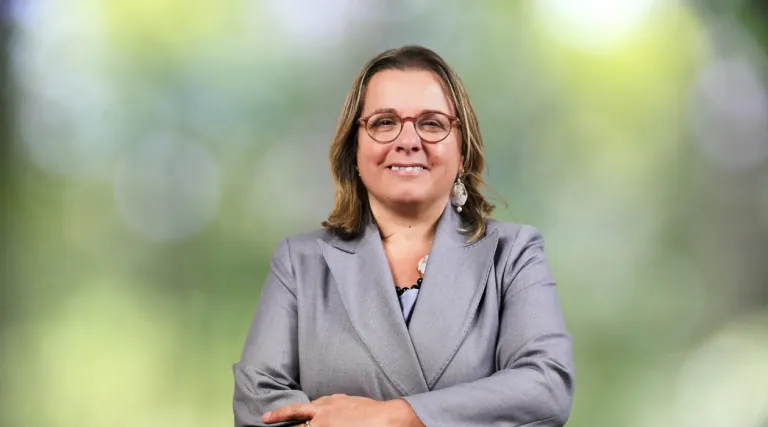
Dr. Annosi guides executives and professionals in aligning business practices with sustainability goals at WUR. Get to know what drives her.