Online Master's Courses in Nutritional Epidemiology and Public Health

Find the course that fits your work
Online Master's Courses- MSc-level depth, without committing to a full degree
- Fully online and designed for working professionals
Follow individual MSc-level courses in nutritional epidemiology and public health, without committing to a full degree. These part-time, fully online courses are designed for working professionals. Take one course to deepen a specific skill, or combine multiple courses to strengthen your epidemiological and dietary assessment toolkit.
How it works
You study fully online within a fixed course period, alongside other professionals. Each week has a clear structure and you can plan your study time flexibly within the week.
The learning format is supervised self-study, supported by an online platform with materials, exercises, assignments and discussions. Assignments have deadlines, so you stay aligned with the course pace and the cohort.
An online exam is typically scheduled on a fixed date at the end of the course period and is taken with remote proctoring. Some courses may include an additional assignment or portfolio element. There are no online live classes, although some courses may occasionally offer a live question hour.
Practical information
Start dates and deadlines
Each course runs within a fixed course period, with a clear start and end date. You join a cohort, which helps you stay on track and learn with other professionals through the online platform.
Registration closes before the course starts, and the exact deadline differs per course and edition. The most reliable information is always listed on each course page under Key details.
If you want to combine courses, it is worth planning early. Some courses run only once per year, so a realistic schedule often spans multiple start moments.
Start dates and deadlines
Each course runs within a fixed course period, with a clear start and end date. You join a cohort, which helps you stay on track and learn with other professionals through the online platform.
Registration closes before the course starts, and the exact deadline differs per course and edition. The most reliable information is always listed on each course page under Key details.
If you want to combine courses, it is worth planning early. Some courses run only once per year, so a realistic schedule often spans multiple start moments.
Study load and duration
All courses in this selection are compact and intensive. The course pages list a duration of four weeks, with an average study load of around 20 hours per week.
You can usually decide when to study during the week, but you should reserve steady weekly time. The workload is manageable for professionals when you treat it as a consistent weekly commitment rather than a last-minute push.
Because the courses are MSc level, prior knowledge and experience can make a real difference to how much time you need. Course pages specify assumed and prerequisite knowledge where relevant.
Online learning experience
You learn through a digital platform designed for supervised self-study. Activities can include knowledge clips, e-learning modules, individual and group exercises, assignments and online discussions.
The structure is weekly and predictable, which helps professionals combine study with work. You can study at times that suit you, but assignments have deadlines so you keep pace with the cohort.
Interaction is mainly asynchronous, which works well across time zones. Some courses may occasionally offer a live question hour via MS Teams, but there are no online live classes.
Assessment and exam
Most courses conclude with an online exam scheduled on a fixed date. Exams are taken off-campus using remote proctoring, and formats can include closed and open questions.
Assessment can also include individual assignments, participation in discussions, or a portfolio element, depending on the course. The course page describes the exact assessment components for that module.
Participation in the exam is optional. If you decide not to take the exam, you do not qualify for a certificate and/or micro-credential.
Entry requirements and software
These are MSc-level courses, so a relevant background is expected. Multiple courses recommend starting with a BSc-level education in a nutrition or health-related field, with a solid background in statistics.
Some modules assume knowledge from other NEPH courses, and the pages list this explicitly. For example, intermediate and advanced analytical courses expect you to understand study designs, effect measures, validity concepts, and basic regression interpretation.
Several courses require basic skills in R (RStudio). Where this is expected, it is stated as prerequisite knowledge on the course page.
Fees and materials
The fee is listed per course on each course page. In your current selection, the displayed fee is € 1.452,00 across modules, but this can change by edition, so the course page should remain the source of truth.
Course materials are typically provided in the online learning environment. Some courses reference specific textbooks or readings, and the page will indicate whether an e-book is available through the WUR library or whether literature is provided online.
If your employer pays, it helps to share the course page so they have the full practical details in one place.
Suggested routes
If you want to build skills step-by-step, it helps to combine modules in a logical sequence. The course pages indicate assumed and prerequisite knowledge, and they also reference related courses.
A common foundation is to start with descriptive and analytical epidemiology. From there, you can move into intermediate analytical topics such as confounding and effect measure modification, and then progress to advanced analytical modelling once your statistical base is strong.
For dietary assessment, the pages explicitly mention assumed knowledge between modules, such as building from intake assessment towards evaluation of dietary assessment methods.
Full Online MSc
If you are looking for a complete master’s programme rather than stand-alone modules, the MSc Nutritional Epidemiology and Public Health (online) is a part-time, online degree that typically takes 3 to 4 years. The programme is designed around an approximate workload of 20 hours per week.
Although the programme is online, it includes an on-campus “WUR Week” in the second year, where students meet lecturers and peers and explore thesis projects.
The structure described on the master page is a two-year course phase followed by an internship and master’s thesis phase, with potential options to organise these in your professional context.
Stories from other professionals
Thinking about studying Nutritional Epidemiology and Public Health while working? Discover what motivates people to join, what studying alongside a career is really like, and how the programme connects with professional practice.

How Zahra brings research-based nutrition knowledge into her work as a dietician
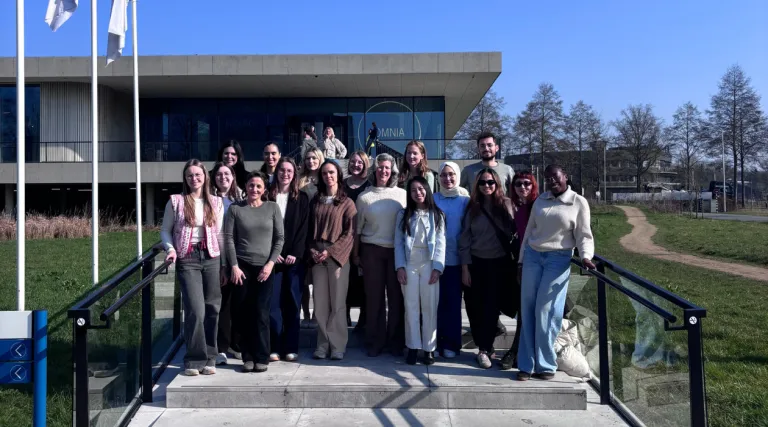
From data to better health: how epidemiology turns patterns into impact

From dietician to researcher: how Mare is taking the next step with an online master’s
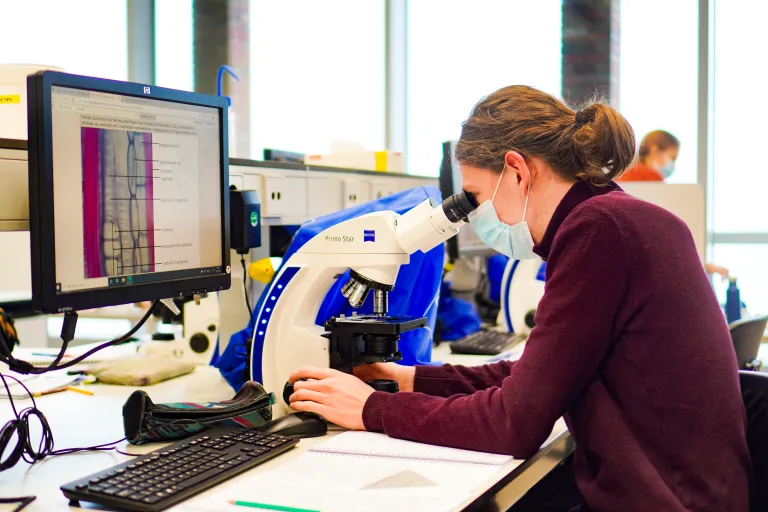
Student story Aveline
Overview of the courses (5)


Interested in following one of the Online Master's Courses?
Do you have questions about one of the online master's courses, entry requirements, or how to combine a module with your work? Feel free to get in touch.