How biodiversity and local economy intertwine on Lombok
- Olivia Azhari
- Expert

“Community power makes mangrove tourism on Lombok a driving force for the economy and ecology.”
How can biodiversity be structurally incorporated into local development projects? On behalf of Wageningen Social & Economic Research, Olivia Azhari conducted research into ecotourism in communities on the Indonesian island of Lombok. Biodiversity is part of local decision-making there.
Jor Bay is a vast coastal bay in the south-east of Lombok. The mangrove forests along the coast are breeding grounds for fish, shrimp, crabs, and shellfish. Local fishermen depend on them for their livelihood. Mangroves also protect the coast from flooding; their dense root systems break waves and prevent coastal erosion. Indonesia has the largest share of mangrove forests in the world. However, these are under severe pressure due to drainage and logging.
Bale Mangrove Ecotourism
Attention to biodiversity was not a given in the community, says Azhari: ‘The primary concern of residents is: how do I provide an income for my family? When young people returned to their village during the coronavirus pandemic, they found the existing mangrove forest polluted with waste. They decided to clean up the rubbish: they saw an opportunity to do something for their village. Initially, they simply started cleaning up. Gradually, they came up with another idea.’
The young people saw opportunities to boost the local economy and their own future. This is how the Bale Mangrove Ecotourism initiative was born. Walking trails, winding between the enormous root systems of the mangroves, were created, and excursions for tourists were organised. Gradually, the realisation grew that a healthy income and a healthy natural environment are inextricably linked: ‘The motivation to protect the ecosystem comes from the everyday life of the community,’ says Azhari. ‘A cleaner mangrove forest attracts more fish and shrimp, makes the area more attractive to tourists, and thus increases local income.’
Awig-Awig
An important incentive is Awig-Awig. Azhari describes this as a local regulatory system that is widely practored in Lombok. In the Jor Bay area, the Awig-Awig is written into a law book and is enacted by the local village chiefs and civil society organisations. ‘It contains agreements on, for example, prohibiting illegal fishing or prohibiting mangrove destruction. In case of mangrove destruction, for every mangrove tree that is cut or destroyed, the offender must plant a hundred more trees as a sanction. Although the rules do not have legal power because they are not part of national law, they work in practice. The local community uses Awig-Awig as their moral compass.’
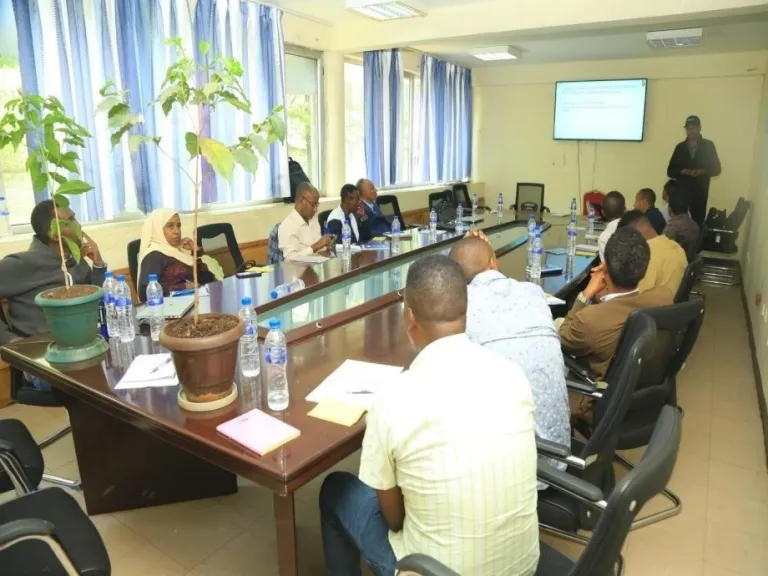
In the research project Towards a Stewardship Economy, Azhari and her colleagues at Wageningen Social & Economic Research (WSER) collaborated with local partners and IPB University, an Indonesian agricultural university. In 2024, the researchers conducted interviews and focus group discussions with village heads, young people, women, NGOs, and local administrators. They created an 'interest-influence matrix' to see who has power and motivation and mapped out which local forces stimulate or hinder ecotourism.
Youth and women
Because Olivia speaks Indonesian, the conversations could be conducted directly in the local language. Gradually, she discovered that there was a lot of local energy: 'Two young ‘local champions’ were the initiators of the initiative. Later on, they inspired other young people to also take action. The women are also important as producers of terasi, a traditional shrimp paste, and crab crackers. They then sell these to tourists. And the village chiefs and local civil society organisations are important because they support the Awig-Awig agreements and thus protect the ecosystem.'
Bale Mangrove is now considered a success story in Jor Bay. The area is cleaner, the mangroves are recovering, and the increased employment opportunities are encouraging more young people to stay rather than leave for the city. ‘The success of Jor Bay is that there is a network of people who hold each other accountable,’ Azhari concludes based on the research. ‘The sense of community is already deeply rooted in Indonesian society. Yet the enabling environment, where the elements of people, planet, and profit can be achieved in balance, is an important aspect to ensure success of initiative, such as Bale Mangrove.’
Lessons
What lessons can other coastal communities wishing to promote ecotourism learn from this? Azhari: ‘To get started, build on existing culture and rules; they form a powerful foundation. It helps if local rules are also supported by overarching legislation. It is also wise to closely involve youth and women: young people are often good ambassadors who have a wide reach through social media, and women strengthen the local economy with traditional products.’
Perhaps the most important lesson for her is that researchers and communities learn from each other: ‘In many projects, researchers bring knowledge. In this project, we really learned from each other. Our most important role was to gather and collate knowledge as a basis for joint learning. And when a community takes responsibility for its environment, really cares about it, and holds each other accountable for agreements, local decision-making can naturally be nature-inclusive as well.’
Collaboration
In the research project Towards a Stewardship Economy, Azhari and her colleagues at Wageningen Social & Economic Research (WSER) collaborated with local partners and IPB University, an Indonesian agricultural university. The research was funded by the Dutch Ministry of Agriculture, Fisheries, Food Security and Nature (LVVN).

Achieved impact
The research strengthened locally led mangrove ecotourism in Jor Bay by making biodiversity part of everyday decision-making. It supported community governance through Awig-Awig, boosted local incomes, created jobs for youth and women, improved mangrove restoration, and demonstrated how ecological protection and economic development can reinforce each other.
Together we make a difference
Ask our expert:
Other impact stories
Wageningen University & Research (WUR) works on global challenges around food, biodiversity, and climate. Our knowledge is putted into practice through our collaborating partners. In deepening impact stories we write more about the research and impact we realise.