Restoration of salt marshes and seagrass beds delivers a triple win
- Fee Smulders
- Researcher Wageningen Marine Research

“Giving nature more space delivers improved biodiversity, increased carbon storage and stronger coastal defence. It is a triple win.”
Acres and acres of salt marshes and seagrass beds have been lost due to large-scale dike construction and land reclamation. As a result, the Netherlands has lost its natural buffers that are rich in biodiversity. Fee Smulders, researcher at Wageningen Marine Research, is studying how these ecosystems can be restored. In her opinion, they are of crucial importance for biodiversity, carbon storage and our own security.
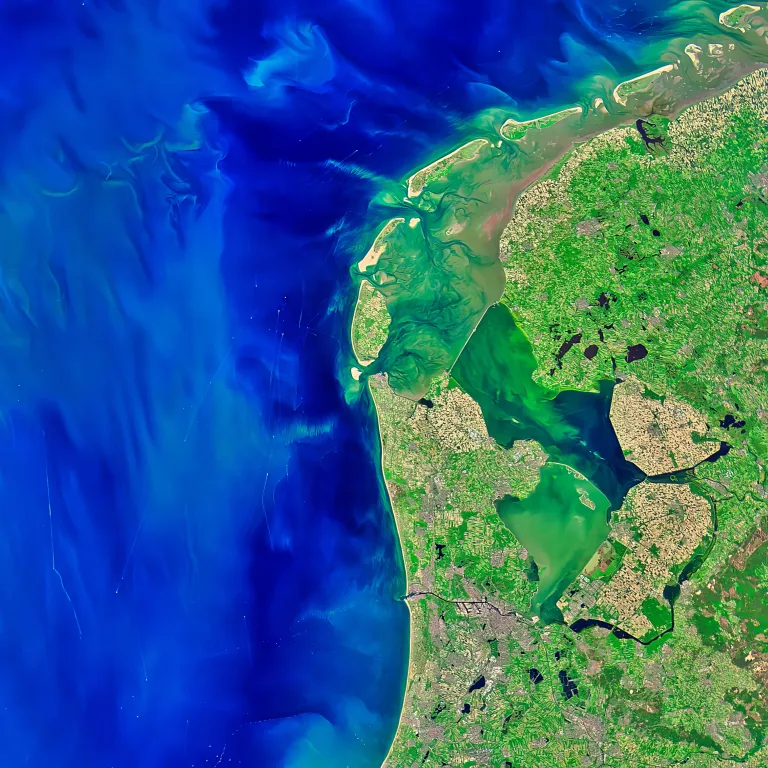
Drone images of the salt marshes off the island of Schiermonnikoog reveal what a large part of the Dutch coast used to look like: a vast landscape of creeks and overgrown mudflats that gradually connect the sea and land. Due to land reclamation, most of the natural salt marshes have been lost. This has been offset by the creation of artificial salt marshes in the Wadden Sea region and in Zeeland. What were once intended as extra areas for agriculture are now being increasingly used for the restoration of nature.
Vulnerable to drowning
Moving as one with the waves, salt marshes form unique ecosystems that are essential for several reasons. They provide a habitat for plants, aquatic animals and tens of thousands of birds, act as a natural buffer against flooding and coastal erosion, and storage carbon. So, there is reason enough to maintain and restore them. But as Smulders explains, that doesn’t happen by itself. Together with colleagues, she has researched the extent to which salt marshes grow to adapt to rising sea levels. Although the results are less gloomy than she anticipated, there is still cause for concern. “We can see that the artificially created salt marshes off the mainland in the Wadden Sea are growing by 11 to 17 millimetres per year, while the sea is rising by 2 to 3 millimetres per year. But island salt marshes, such as those off Ameland and Schiermonnikoog, are only growing by 1 to 5 millimetres per year. They are vulnerable to drowning.”
Restoration therefore requires human intervention. In an experiment off the eastern coast of Ameland, the salt marshes will soon be closed off to livestock, to prevent the vulnerable marshes from being grazed too intensively. In a pilot project, dredged silt from the Wadden Sea will also be transferred to bald spots in the marshes. “We call this nature-based dredging. Dredgers are constantly working to keep the channel between Holwert and Ameland navigable. We are using the silt dredged up from there to fill in vulnerable parts of the salt marshes, instead of dumping it elsewhere in the Wadden Sea.”
Undoing land reclamation
In Smulders’ previous literature study, she found a silt layer of 10 to 15 centimetres to be the most suitable thickness to attract birds and restore plant growth. In addition to using dredged silt for elevation, undoing land reclamation is another logical strategy, in Smulders’ view. “We have been expanding the land for years by constructing dikes. But behind the dikes, there isn’t any sediment supply from the sea left, and land subsidence caused by land use is accelerating. It makes sense to give the sea more space, for example by undoing land reclamation, or by temporarily using tidal polders. This is difficult because most of the land is agricultural but it is indeed a clever solution to improve biodiversity and to better protect the coast.”
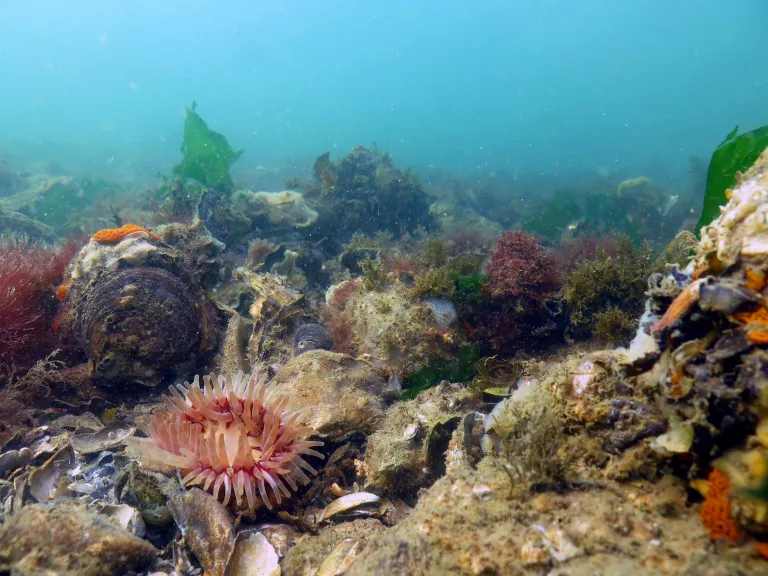
According to Smulders, it isn’t only salt marshes that are in need of restoration but seagrass beds, too. Until a century ago, these beds could be found all over the Wadden Sea and Zuiderzee. But only one percent of them are left – primarily around the island of Griend, off Terschelling. “Seagrass beds are an underappreciated ecosystem”, says Smulders, who can often be found in these beds in her diving gear. “If you spend hours in them, you notice the diversity. They are a breeding ground for fish and other aquatic animals. Less visible, but just as important, is the function of seagrass in filtering water, softening the impact of waves and capturing carbon in the sea floor in the long term.”

Divyashri Varadharajan
Not focusing on separate habitat types
The EU Nature Restoration Regulation is giving seagrass restoration a boost. According to Smulders, the regulation also requires Member States to act quickly: “Over the next 25 years, measures must be taken to ensure that at least 90 per cent of marine habitat types have been restored by 2050. That is an enormous task, but it also provides a major incentive to develop knowledge and collaborate with knowledge institutions, businesses and governments. We also need to look at connections between ecosystems. Ideally, you want a shell reef, followed by seagrass, a salt marsh and, finally, peatland or forest. This creates a natural sequence that benefits biodiversity and coastal defence. If one link is missing, it affects the entire system.”
But restoring seagrass beds isn’t the easiest task, Smulders admits. “It is a rather peculiar species. Models have been developed to find the best spots for restoration but it sometimes simply grows better somewhere else.” Still, there are positive developments. For example, the restored seagrass around Griend is doing better than expected. “Together with German and Danish research institutions and public authorities, we are now considering how we can tackle seagrass restoration on a large scale”, explains Smulders. “After all, the bigger the bed, the better the circumstances for the seagrass itself.”
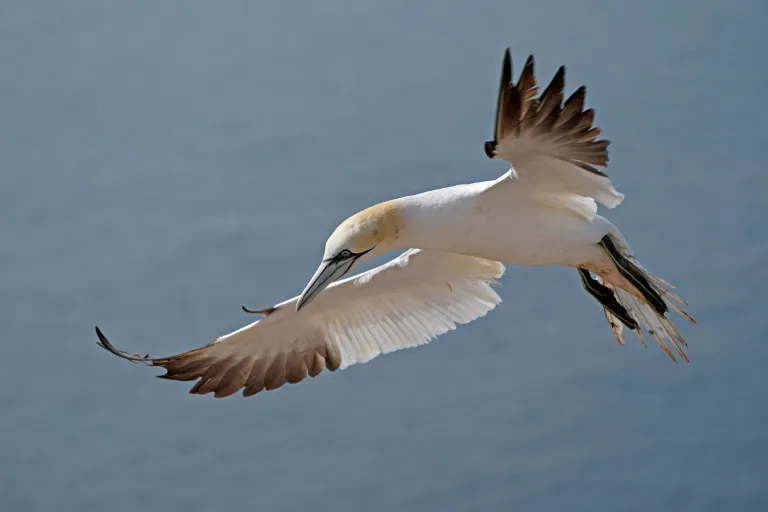
The European FLY2 Coastal Wetlands project is also centred on systems-based thinking. This project strives to create a single monitoring system for coastal wetland areas along the East Atlantic migration route, all the way from the North Pole to West Africa. “We would like to gain better insights into how birds use these areas and how we can better protect populations across state borders. For example, we might see that certain species of migratory birds avoid our part of the Wadden Sea in favour of areas outside the Netherlands. The question is whether we need to give our all to get these birds to come back, or whether we need to focus on species that actually target the Netherlands instead. From the perspective of nature, it is more logical to monitor the connected ecosystem in its entirety.”
Daring to give advice
Contributions to projects like this illustrate the societal relevance of Smulders’ work. “With Wageningen Marine Research, we play an important advisory role for policymakers concerning nature-based solutions, for example for salt marshes and seagrass. Uncertainties always surround this. Academics are quick to err on the side of caution and like to emphasise that nothing is one hundred percent certain. But policymakers are used to weighing up risks well.”
“With Wageningen Marine Research, we dare to give clear recommendations”, Smulders concludes. “The decision to give nature more space delivers improved biodiversity, increased carbon storage and stronger coastal defence. It is a triple win.”
Collaboration
- Research institutions, businesses and public authorities (including the Ministry of Agriculture, Fisheries, Food Security and Nature – LVVN)
- German and Danish partners in seagrass restoration
- European partners within FLY2 Coastal Wetlands

Impact achieved
Research by Wageningen Marine Research shows how restoring salt marshes and seagrass beds can contribute to biodiversity, carbon storage and coastal defence. This knowledge supports decisions on nature restoration and nature-based solutions and helps manage ecosystems in a more integrated way.
Together we make a difference
Do you have a question about this subject or do you want to collaborate with us? Contact our expert.
Other impact stories
Wageningen University & Research (WUR) is working on major global challenges related to food, biodiversity, and climate. Our knowledge is applied by our partners. In in-depth impact stories, we share more about our research and the impact we achieve.