Taking an integrated view of human pressures on the North Sea and Wadden Sea
- Gerjan Piet
- Senior scientist Marine Ecology

“Insights into cumulative effects is the best way to improve biodiversity in the North Sea and Wadden Sea.”
Every human activity in the North Sea and Wadden Sea impacts the ecosystem. If you look at the individual activities alone, then their impact may seem modest. But this neglects to take into account the cumulative effects, argues Gerjan Piet, a researcher at Wageningen Marine Research. “We show what happens when all these activities come together.”
Gerjan Piet’s scientific career was dedicated to nature conservation from the start. Along the way, he was increasingly compelled to study water and, finally, the sea. “For me, the sea stands for freedom – a place where I feel at home. And it really is my actual home for some of the time; I spend part of the year living in my flat-bottomed boat in the Wadden Sea and in inland waters.”

Oscar Bos
Isolated focus falls short
Piet started his career at the Netherlands Institute for Fisheries Research (Rijksinstituut voor Visserijonderzoek), the precursor to Wageningen Marine Research. Where biodiversity was concerned, the research there was focused solely on the state of individual species targeted by the fishing industry. Piet soon found this focus too narrow and shifted his gaze. “I turned my attention to the impact of fishing on the entire fish stock. Then there was the impact of fishing on the sea floor and the rest of the ecosystem. And then the next logical step came: the fact that fishing is not the only human activity that impacts biodiversity in the North Sea. Freight ships sail through it, wind farms have been built in it, cables have been laid across the sea floor. And all sorts of polluting substances are released into the sea by humans.”
For a long time, policy and research focused on individual sectors alone. But this approach falls short, Piet claims. “If you look at the isolated impact of a sector on biodiversity in the North Sea, then it may seem modest. But this underestimates the problems we are currently dealing with. That is why I believe we are now facing a biodiversity crisis.”
SCAIRM: comparing apples to oranges
According to Piet, improved biodiversity starts with integrated insights. Together with colleagues, he developed the SCAIRM (Spatial Cumulative Assessment of Impact Risk for Management) research method. This method makes it possible to compare apples to oranges. He explains: “We calculate the impact risk of all activities, in other words, the risk that the condition of a species or community of species declines. Thanks to this methodology, we can show the impact of various activities – fishing, wind turbines, shipping and polluting substances – on different parts of the ecosystem. For example, we can show to what extent fishing disrupts the sea floor, offshore wind farms disrupt birds and polluting substances disrupt fish in comparison to all the other activities.”
Using SCAIRM, Piet and his colleagues can map out the cumulative impact in great detail. “All activities are split into impact factors. We can then calculate the effects these factors have on parts of the ecosystem – birds, fish, the sea floor, and so on. For the North Sea alone, we have identified over 50,000 so-called chains – combinations of an activity and an impact factor. For each chain, we estimate the impact risk on the basis of a trio of parameters.”


Convincing reasoning
This level of detail helps in policy discussions, Piet explains. “If you know the impact of each activity, you can take very focused measures. Imagine that policymakers wanted to reduce the impact of seabed disturbance. In this case, it would help to know that beam trawling has a significant impact while pelagic fishing has very little impact. However, the latter form of fishing increases the risk of marine mammal by-catch.”
The insights into cumulative effects foster careful discussion on the desired policy measures. To this end, Piet emphasises the importance of transparency. “If we state that fishing is one of the biggest impact factors, then the sector may rightly question what that assumption is based on. We then need to be able to provide convincing reasoning, which is why transparency is an essential component of SCAIRM.”
At the same time, Piet aims to ensure that the conversation does not get bogged down in discussions about the smallest details. “We need to provide the most complete and integrated advice possible, with sufficient detail but without drowning in complexity. If people are left feeling that it is all too complicated, then they’ll dig their heels in. Our message to policymakers needs to be well substantiated and therefore trustworthy for decision-making, without every letter of the underlying model needing to be spelt out.”
Taking positive effects into account
With the arrival of the EU’s Nature Restoration Regulation, the approach to problems surrounding biodiversity has been given a substantial boost. Piet points out that there is once again a great need for integrated management in this regard. The way in which Wageningen Marine Research and the SCAIRM model work suit this very well but still require adjustments. He explains: “The current model is set up to calculate the negative effects of human action and to then provide advice on how to mitigate this. But nature restoration means that you create positive impact through intervention. The model therefore also needs to be able to take the positive effects of restoration measures into account.”
Piet and his colleagues are thus tinkering with the model so that it can also be used to show that negative effects can be compensated by measures that deliver positive effects.
Take small steps
The aims of the Nature Restoration Regulation are incredibly ambitious. Piet doesn’t feel a need to try out the role of policymaker himself. But he does have some advice. “I think it would make sense to take small steps in the areas where the greatest benefits can be achieved. Simply start and do so with realistic and effective measures. An integrated perspective is essential to this end.”
The work of Piet and his colleagues can help in this regard. “We can calculate the risks associated with certain future scenarios in great detail. For example, in a scenario in which the wind farms in the North Sea were to be broadly expanded, we could calculate exactly how many extra risks would arise for migratory birds. And we could then map out which mitigating measures or nature restoration strategies could compensate for these risks.”
This example illustrates exactly how scientific research can ensure effective and integral policy. “We as academics can make the difference here. And I can see that policymakers have a need for this, as well. Insights into cumulative effects enable well-considered, integrated policy. In my view, there is no better way to improve biodiversity in the North Sea and Wadden Sea.”
Collaboration
Ministry of Agriculture, Fisheries, Food Security and Nature (LVVN)

Achieved impact
SCAIRM maps the cumulative impact of human activities on biodiversity in the North Sea and Wadden Sea. This helps policymakers underpin targeted, integrated measures. The method is being further developed to also take the positive effects of nature restoration into account.
Together we make the difference
Do you have a question regarding this subject or do you want to collaborate with us? Contact our expert.
Other impact stories
Wageningen University & Research (WUR) is working on major global challenges related to food, biodiversity, and climate. Our knowledge is applied by our partners. In in-depth impact stories, we share more about our research and the impact we achieve.
The European flat oyster makes a comeback in the North Sea
Genetic fish atlas to give management and policy a helping hand
Restoration of salt marshes and seagrass beds delivers a triple win
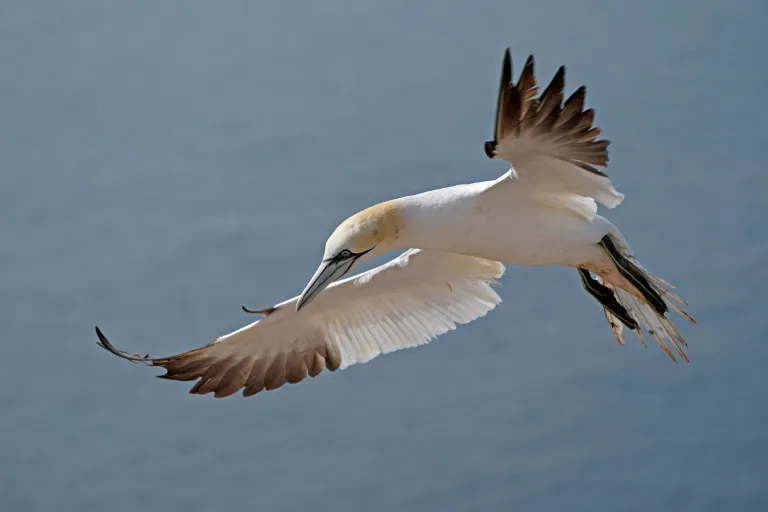
How seabirds respond to disturbance in the North Sea