Online Master's Courses in Food Technology

Find the course that fits your work
Online Master's Courses- MSc-level depth, without committing to a full degree
- Fully online and designed for working professionals
Follow individual MSc-level courses in Food Technology, without committing to a full degree. These part-time, fully online courses are designed for working professionals in the food sector. Take one course to deepen a specific expertise area, or combine multiple courses to broaden your technological toolkit across product design, processing, quality and safety.
How it works
You study fully online within a fixed course period. Courses are designed as supervised self-study, supported by an online learning environment (Brightspace) with knowledge clips, explanations, exercises and assignments.
Many courses are scheduled as 4-week modules with an expected study load of around 20 hours per week. Some courses run longer, for example 7 weeks.
Assessment differs per course. In many modules, an online exam is offered on a fixed date via remote proctoring. In other modules, assessment can be based on assignments that need to be completed by the end of the course period.
Practical information
Start dates and deadlines
Each course runs within a fixed course period with a clear start and end date. You join a cohort and follow the same overall timeline as other participants, while studying at your own pace within that period.
Registration closes before the course starts. The exact start date and registration deadline are listed on each individual course page under Key details.
If you are planning to take multiple courses, it helps to plan early, as courses run on specific dates and not all modules start at the same moment.
Start dates and deadlines
Each course runs within a fixed course period with a clear start and end date. You join a cohort and follow the same overall timeline as other participants, while studying at your own pace within that period.
Registration closes before the course starts. The exact start date and registration deadline are listed on each individual course page under Key details.
If you are planning to take multiple courses, it helps to plan early, as courses run on specific dates and not all modules start at the same moment.
Study load and duration
Many courses are offered as 4-week modules with an expected study load of around 20 hours per week.
Some courses run longer, for example 7 weeks with an 80-hour study load. This is shown on the course page, so you can quickly assess what is realistic alongside your work schedule.
Because the level is MSc, the time you need can depend on your background and experience in the topic area. The course page provides the most reliable indication of requirements and expected effort for that module.
Online learning experience
Courses are delivered in an online learning environment (Brightspace) and built around supervised self-study. You work through knowledge clips, explanations and exercises, and apply concepts through assignments and practical cases (depending on the module).
The format is designed for professionals: you can typically decide when to study during the week, while still following the course timeline and assessment moments.
Interaction and support take place online. Course pages describe the learning activities and what you will be expected to submit or complete during the course period.
Assessment and exam
Assessment differs per course. In many modules, an online exam is offered on a fixed date and is taken via remote proctoring. Participation is optional, but if you do not participate, you do not qualify for a certificate and/or micro-credentials.
Some courses assess learning through assignments rather than an exam. For example, assessment can consist of a group assignment plus an individual assignment that must be finalised by the end of the course period, with the same principle that participation is required to qualify for a micro-credential.
Most courses issue a digital micro-credentials certificate (EduBadge) with 3 ECTS upon successful completion.
Entry requirements and software
These are MSc-level courses. Course pages commonly state that you are expected to have at least BSc-level education in Food Science and Technology or a related field such as Chemical Engineering or Biotechnology.
Beyond the general level, prerequisites can differ by topic. Analytical and modelling courses may expect comfort with quantitative reasoning and tools used in the course (for example Excel-based modelling practice).
The safest approach is to check the “Target audience” and course description on each module page before registering, especially if you are moving into a new domain such as toxicology, microbiology, or advanced analysis.
Fees and materials
Course fees are listed per module on the course pages. In the modules reviewed here, the displayed fee is typically € 1.452,00, but the course page should remain the source of truth for the current edition.
Learning materials are provided through the online platform. Some courses mention optional background reading or a textbook for additional context, but it may not be necessary to purchase it.
If your employer pays, sharing the specific course page is usually the easiest way to align on dates, workload, fee and registration deadline.
Suggested routes
Because the portfolio spans multiple Food Technology sub-domains, a practical way to choose is to start with the area closest to your role, such as ingredient functionality, safety, modelling, process design or sustainable processing. From there, you can deepen your expertise by adding a related module in the same cluster. Many course pages also suggest “Related courses” to help you build a coherent sequence.
After completing two or more courses, you can choose to do a capstone project in consultation with a Wageningen expert. This is a tailor-made project in which you apply your learning to a defined case or question and deliver a short paper with results and conclusions, supported by expert coaching.
Full Online MSc
If you are looking for a complete master’s programme rather than stand-alone modules, the Master’s in Food Technology (online) is a part-time programme with a typical duration of 3 to 4 years.
The programme is fully online, with the exception of two essential on-campus lab practicals in Wageningen, and it integrates knowledge from disciplines such as food chemistry, physics, microbiology, process engineering and quality design.
In the first two years, the course phase is described as roughly 20 study hours per week, followed by later components. The programme explicitly notes that it does not focus on nutrition or dietary health effects.
Stories from other professionals
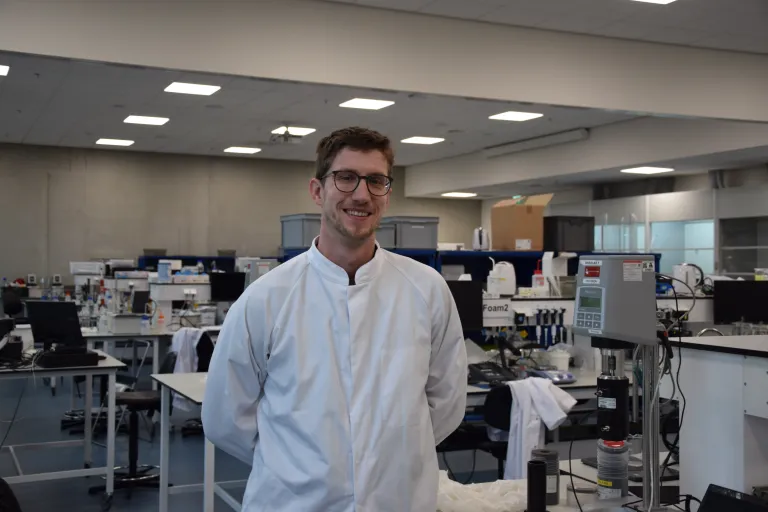
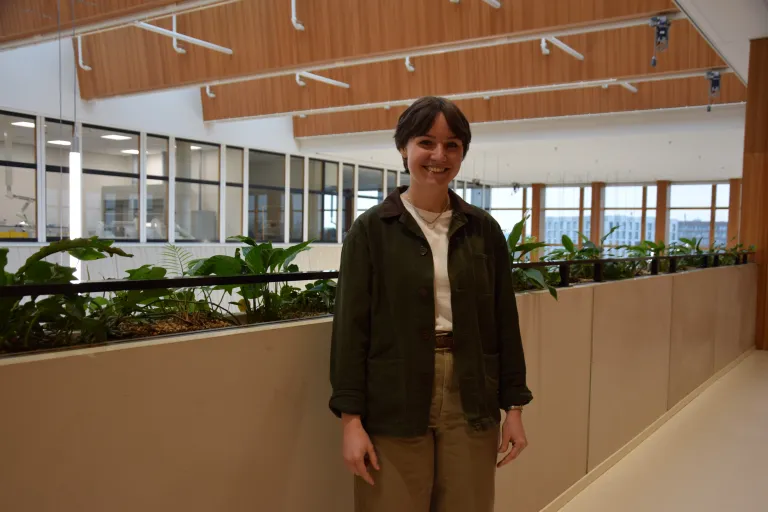
What is it like to study an MSc-level plant breeding course alongside your job? In these short stories, participants share why they enrolled, how they combined study with work, and what they took back into their day-to-day practice.

Overview of the courses (21)


Interested in following one of the Online Master's Courses?
Do you have questions about one of the online master's courses, entry requirements, or how to combine a module with your work? Feel free to get in touch.